

Amazing experience! Went above and beyond, excellent example of integrity. I would recommend Davis Family Arbor Service for any tree related job, big or small. Amazing attention to detail, very customer service oriented! 10/10 satisfied!
Tree Preservation & Arborist Services in Tulsa, Oklahoma
Tree Health • Tree Risk Assessment • Advanced Diagnostics • Tree Forensic Investigations • Construction Tree Protection • Long-Term Tree Preservation
Protecting, preserving, and managing valuable trees throughout the Tulsa metropolitan area.
Davis Family Arbor Services is led by Brad Davis, ISA Board Certified Master Arborist® (MW-6328B), ISA Tree Risk Assessment Qualified (TRAQ), and ISA Florida Chapter Prescription Pruning Qualified (PPQ). We provide science-based arboricultural consulting, tree preservation, tree health evaluations, tree risk assessments, advanced diagnostics, tree forensic investigations, and long-term management strategies for homeowners, commercial properties, HOAs, municipalities, public agencies, attorneys, insurance professionals, and developers throughout Tulsa, Broken Arrow, Jenks, Bixby, Sapulpa, and surrounding communities.
Special Offers for New Customers
-
10% Off Qualifying
Services Over $500New customers receive 10% off removals and pruning over $500.
Professional Arboricultural Services
Davis Family Arbor Services provides science-based arboricultural consulting and tree care for residential properties, commercial properties, HOAs, municipalities, public agencies, and development projects throughout the Tulsa metropolitan area.
Preservation Comes First
Whenever practical, our objective is to preserve healthy trees, identify developing concerns early, and help property owners and public decision-makers make informed management decisions through objective, evidence-based arboriculture.
When removal becomes the most appropriate recommendation, we explain why and perform the work using methods suited to the tree, the site, and the surrounding property.

About Davis Family Arbor Services
Davis Family Arbor Services is a locally owned and operated arboriculture firm based in Tulsa, Oklahoma. For decades, we have helped Tulsa and Tulsa County homeowners, businesses, and developers protect and preserve the mature trees on their properties through professional, science-based tree care.
Our work is built around one guiding principle:
Trees deserve objective evaluation before irreversible decisions are made.
Whether evaluating a mature post oak before construction, preparing a formal tree risk assessment, investigating internal wood condition using advanced diagnostics, conducting a tree forensic investigation, developing a municipal tree-management strategy, or creating a long-term preservation plan, our recommendations are based on accepted arboricultural practices, careful observation, measured information, and the client’s management objectives.
Professional qualifications include:
- ISA Board Certified Master Arborist® (MW-6328B)
- ISA Tree Risk Assessment Qualification (TRAQ)
- ISA Florida Chapter Prescription Pruning Qualification (PPQ)
- Member, International Society of Arboriculture
- Member, American Society of Consulting Arborists
Tulsa County Neighborhoods and Communities We Serve
We proudly serve:
Why Property Owners, Managers, and Public Agencies Choose Davis Family Arbor Services

Led by an ISA Board Certified Master Arborist®
Preservation-first philosophy
Science-based recommendations
Advanced diagnostic capabilities
ANSI A300-based pruning specifications
Tree forensic investigation experience
Written consulting reports
Tree Risk Assessment expertise
Municipal and public-property consulting capabilities
Construction tree protection experience
Clear communication and written proposals
Family owned and locally operated
Fully insured
24/7 emergency response
Advanced Diagnostic Equipment
We invest in specialized diagnostic equipment rarely available through traditional tree service companies.
Our capabilities include:
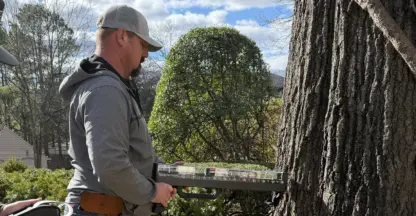
- Arbotom® Sonic Tomography — A non-invasive testing device that uses sound waves to measure how quickly they travel through the trunk, helping identify internal decay, cavities, and structural weaknesses without cutting into the tree.
- Resistograph® Resistance Drilling — A precision drilling instrument that measures resistance as a fine needle passes through wood, allowing arborists to detect internal decay, density changes, and hidden defects within the trunk or major limbs.
- ArboRadix® Root Mapping System — A ground-penetrating diagnostic tool that helps locate and map root systems beneath the soil surface, providing insight into root structure, distribution, and potential conflicts with construction or utilities.
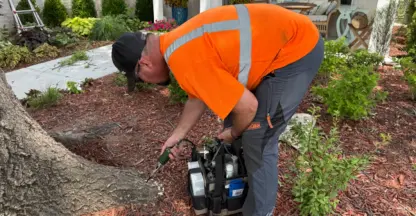
- AirSpade Root Investigation — A specialized tool that uses compressed air to safely remove soil around roots, exposing them for inspection without causing significant damage, commonly used for root collar excavation and root health evaluation.
- Root Collar Excavation (RCX) — A process, often performed with an AirSpade, that removes excess soil from the base of a tree to expose the root flare, helping identify girdling roots, decay, or improper planting depth.
- Digital Tree Assessment and Documentation Technology — Software and field tools used to record tree data, capture images, map locations, and generate detailed reports for analysis, documentation, and long-term monitoring.
- Ground Protection Systems — Temporary protective mats or panels placed over soil to prevent compaction and damage from heavy equipment during tree work or construction activities.
- Specialized Rigging Equipment — Professional-grade ropes, pulleys, and hardware used to safely control the movement of branches and wood during pruning or removal, minimizing impact to surrounding property.
- Crane-Assisted Operations — The use of cranes to safely lift and remove large tree sections in confined or high-risk areas where traditional climbing or rigging methods are not sufficient.
- Tracked Lift Access — Compact, track-mounted aerial lifts that allow arborists to safely reach tree canopies in areas with limited access or sensitive ground conditions.
These diagnostic tools provide additional measured information when important management decisions cannot be adequately supported through visual inspection alone. Findings are interpreted within the context of the tree, the site, and the specific assessment objective.
Protecting Valuable Trees for Future Generations
Mature trees represent decades of growth that cannot be quickly replaced.
Tree preservation is about protecting that investment through thoughtful planning, early diagnosis, and appropriate management.
Depending on the situation, preservation may include:
- Long-term monitoring — Ongoing observation and periodic evaluation of tree condition over time to identify changes in health, structure, or risk.
- Prescription pruning — Targeted pruning based on specific objectives such as improving structure, reducing risk, or supporting long-term health.
- Construction tree protection — Measures implemented before and during construction to reduce damage to roots, soil, and tree structure.
- Root-zone improvement — Techniques used to enhance soil conditions and root function, including aeration, decompaction, and organic amendments.
- Soil management — Evaluation and improvement of soil properties such as structure, drainage, and nutrient availability to support tree vitality.
- ArboRadix® Root Mapping — Non-invasive technology used to locate and map root systems beneath the soil surface for planning and preservation.
- AirSpade Root Investigation — Controlled air excavation used to expose roots for inspection without causing significant damage.
- Advanced diagnostics — Specialized testing methods used to assess internal wood condition, root systems, and structural integrity.
- Tree forensic investigations — Detailed analysis of tree failures or damage events to determine contributing factors and causes.
- Supplemental support systems — Installation of cabling or bracing to provide additional structural support where appropriate.
- Municipal or campus tree inventories — Systematic documentation and assessment of tree populations for management and planning purposes.
- Scheduled reassessment — Planned follow-up evaluations to monitor changes and adjust management strategies as needed.
No management program can guarantee future tree performance, but appropriate preservation planning may reduce avoidable impacts, improve growing conditions, and extend useful tree life where reasonably achievable.

Financing & Payment Options
- On-Site Evaluation for Tree Services
- Flat-Rate Written Proposals
- Military, Veteran, First Responder, and Teacher Discounts
- Financing options available on qualifying projects
Tulsa Tree Regulations, Zoning Codes, and Local Resources
Tree removal, planting, and major landscaping work in Tulsa may be subject to municipal codes, especially when trees are located near public rights of way, on commercial property, or part of new construction. These regulations protect public safety and preserve the urban canopy.
- City of Tulsa Charter, Ordinances & Executive Orders — The official source for Tulsa Revised Ordinances by title.
- City of Tulsa Permit Center — Permits and licensing for construction and land use projects.
- Tulsa Planning Office — Zoning codes, rezoning applications, and planning resources. (Note: the Planning Office now operates at tulsaplanning.org, not the cityoftulsa.org URL previously listed.)

Additional Tree Care and Safety Resources for Tulsa County
Oklahoma Forestry Services — State tree health resources, Cross Timbers forest management, invasive species information, and storm response guidance for Oklahoma property owners.
International Society of Arboriculture — Professional arborist standards, certification verification, and tree care education from the leading global authority on arboriculture.
Oklahoma State University Extension – Trees — Research-backed homeowner guidance on tree pruning, shrub maintenance, and seasonal care timing for Oklahoma's climate.
National Weather Service Tulsa — Severe weather alerts, storm warnings, wind advisories, and climate data covering Tulsa County and eastern Oklahoma.
TESTIMONIALS
Excellent service. Needed to have tree branches damaged in recent storm trimmed. Got first available appointment and a courtesy call before Brad headed my way. He went above and beyond. Highly recommend Davis Family Arbor Services!
Outstanding job!!! Very hardworking folks whom left our job at the funeral home looking perfect.Would recommend these people to anyone in need of their services.
Excellent family business. Davis Family Arbor Services did a great job taking down two trees and left our property in great condition. Fast response and good work ethics. You can't go wrong with Davis Family Arbor Services.
Highly recommended! Extremely helpful, friendly and came out right away. They helped me save an injured tree.
Amazing Team!!! Jessica was so kind on the phone and Brad called within 30 minutes, assessed the situation and had a crew out immediately. From initial call to job done was 4 hours. Quick, safe and outstanding cleanup. Highly highly recommend and have their info saved if needed in the future!!!
You Can Trust The Experts
At Davis Family Arbor Tree Service


Tree Service Insurance and Coverage
Tree removal after storm damage or unexpected failure is often covered by homeowners insurance. Working with a fully insured, locally established company makes the claim process cleaner.
General Liability Insurance
Protects your property in the unlikely event of accidental damage during tree service operations.
Workers’ Compensation Insurance
Every Davis Family Arbor Services crew member is fully covered while working on your property. Homeowners are protected from liability.
Commercial Vehicle and Equipment Coverage
All service vehicles and equipment are properly insured for safe, compliant operation across Tulsa County and the surrounding metro.
Insurance Claim Assistance
We help simplify the insurance claims process by providing homeowners with photographs, itemized invoices, and supporting documentation related to storm-damaged trees and emergency tree work.
How Davis Family Arbor Services Protects Your Property
Tree removal and trimming involve heavy materials, precise rigging, and careful coordination. Protecting your property is a priority from the first walkthrough to the final cleanup.
Every project begins with a clear plan. We evaluate access points, nearby structures, landscaping, irrigation, and ground conditions to determine the safest removal method. The crew uses controlled rigging to lower branches and tree sections, preventing unnecessary impact to your home, driveway, lawn, fencing, or surrounding landscape.
We protect sensitive areas with ground mats where needed, control debris throughout the project, and maintain an organized work zone. After the work is complete, all debris is removed and the area is raked and walked through with you before we leave.
Your property is not just a job site. It is your home, and we treat it that way.

Recommended Tree Species for Tulsa County
These species are well adapted to the Cross Timbers region, red clay soils, and Oklahoma's climate extremes:
- Bur Oak (Quercus macrocarpa)
- Post Oak (Quercus stellata)
- Eastern Redbud (Cercis canadensis) (Oklahoma's state tree)
- Shumard Oak (Quercus shumardii)
- Chinkapin Oak (Quercus muehlenbergii)
- Pecan (Carya illinoinensis)
- Bald Cypress (Taxodium distichum)
- Lacebark Elm (Ulmus parvifolia)
- Black Gum (Nyssa sylvatica)
- Eastern Red Cedar (Juniperus virginiana) (use with caution near pasture)
These trees develop strong root systems, tolerate Tulsa County's clay soils, resist storm damage better, and outlast many of the ornamentals commonly planted in the greater Tulsa Metro neighborhoods.

How Tulsa County Climate Affects Your Trees and How We Help
The climate across Bixby and the Tulsa metro puts steady stress on trees throughout the year. Severe spring thunderstorms, summer heat and drought, ice storms, and high winds all impact tree health and structural stability. Understanding these conditions helps homeowners stay ahead of common issues like limb breakage, root plate failure, and storm damage.
We plan tree care around local weather patterns, focusing on pruning, hazard reduction, and seasonal maintenance that prepares your trees for what is coming.
Tulsa, Oklahoma Climatology Overview
Month
Avg High (°F)
Avg Low (°F)
Avg Mean (°F)
Avg Precipitation (in)
Avg Snowfall (in)
Avg Snow Days
Jan
47.7
28.5
38.1
1.63
1.7
1.7
Feb
52.7
32.7
42.7
2.10
1.3
1.2
Mar
62.2
41.4
51.8
3.43
0.4
0.4
Apr
71.4
50.5
61.0
4.52
0.0
0.1
May
79.0
59.7
69.4
5.91
0.0
0.0
Jun
88.1
68.8
78.5
4.58
0.0
0.0
Jul
93.2
73.8
83.5
2.85
0.0
0.0
Aug
92.5
72.0
82.3
3.31
0.0
0.0
Sep
84.2
63.7
74.0
4.22
0.0
0.0
Oct
72.8
51.7
62.3
3.72
0.0
0.0
Nov
59.7
40.8
50.3
2.83
0.2
0.3
Dec
49.3
31.4
40.4
2.07
1.2
1.1
Annual
71.9
51.3
61.6
41.17
4.8
4.8
| Month | Avg High (°F) | Avg Low (°F) | Avg Mean (°F) | Avg Precipitation (in) | Avg Snowfall (in) | Avg Snow Days |
|---|---|---|---|---|---|---|
| Jan | 47.7 | 28.5 | 38.1 | 1.63 | 1.7 | 1.7 |
| Feb | 52.7 | 32.7 | 42.7 | 2.10 | 1.3 | 1.2 |
| Mar | 62.2 | 41.4 | 51.8 | 3.43 | 0.4 | 0.4 |
| Apr | 71.4 | 50.5 | 61.0 | 4.52 | 0.0 | 0.1 |
| May | 79.0 | 59.7 | 69.4 | 5.91 | 0.0 | 0.0 |
| Jun | 88.1 | 68.8 | 78.5 | 4.58 | 0.0 | 0.0 |
| Jul | 93.2 | 73.8 | 83.5 | 2.85 | 0.0 | 0.0 |
| Aug | 92.5 | 72.0 | 82.3 | 3.31 | 0.0 | 0.0 |
| Sep | 84.2 | 63.7 | 74.0 | 4.22 | 0.0 | 0.0 |
| Oct | 72.8 | 51.7 | 62.3 | 3.72 | 0.0 | 0.0 |
| Nov | 59.7 | 40.8 | 50.3 | 2.83 | 0.2 | 0.3 |
| Dec | 49.3 | 31.4 | 40.4 | 2.07 | 1.2 | 1.1 |
| Annual | 71.9 | 51.3 | 61.6 | 41.17 | 4.8 | 4.8 |
Source: National Weather Service Forecast Office, Tulsa, OK (1991 to 2020 normals)
Key Tree Risk Factors in the Tulsa County Climate
| Climate Factor | Impact on Trees |
|---|---|
| Spring thunderstorms and tornado season | High winds, wind shear, uprooting, broken limbs, hail damage, and canopy failure |
| Summer heat and drought | Heat stress, leaf scorch, premature leaf drop, branch dieback, and increased vulnerability in shallow rooted or already stressed trees |
| Ice storms (including major Oklahoma ice events) | Heavy ice loading, major limb breakage, structural splitting at weak branch unions, and crown failure |
| Straight line winds and severe wind events | Sudden limb failure, trunk breakage, and complete tree failure, especially in weakened, overextended, or poorly maintained trees |
| Saturated clay soils | Reduced root stability, delayed root plate failure after storms, poor drainage stress, and increased uprooting risk |
| Freeze thaw cycles | Bark splitting, frost cracks, root stress, and damage to already weakened or young trees |
Frequently Asked Questions
Tree preservation is the long-term management of valuable trees through monitoring, diagnosis, structural care, soil improvement, construction protection, and other appropriate arboricultural practices. The objective is to retain important trees whenever reasonably achievable while recognizing that some situations ultimately require removal.
AirSpade excavation uses compressed air to carefully remove soil around selected roots while reducing the likelihood of severing woody roots compared with conventional excavation. It is commonly used for Root Collar Excavation (RCX), root investigations, soil decompaction, and construction-related evaluations.
ArboRadix® Root Mapping is an advanced diagnostic technology that helps identify the location of roots beneath the soil surface. It may be used to support construction planning, utility routing, Tree Protection Zone development, root investigations, municipal projects, and preservation planning while reducing unnecessary excavation.
A Tree Protection Zone is a defined and clearly marked area established around retained trees during construction to reduce avoidable damage to roots, soil, trunks, and branches. The appropriate TPZ depends on the tree, site conditions, and proposed construction activities.
A tree forensic investigation evaluates evidence associated with tree failures, construction impacts, vehicle damage, root injury, storm damage, pruning history, or other events where understanding what happened—and why—matters. Investigations may include advanced diagnostics, documentation, records review, and written consulting reports for property owners, municipalities, public agencies, attorneys, insurers, and other stakeholders.
Yes. Davis Family Arbor Services provides arboricultural consulting, tree risk assessments, tree inventories, preservation planning, construction tree protection, advanced diagnostics, forensic investigations, and written reporting for municipalities, public agencies, parks, campuses, public facilities, and managed properties.
Many mature trees can be successfully retained when preservation planning begins before construction, Tree Protection Zones are respected, and post-construction monitoring continues after the project is complete. No preservation strategy can guarantee survival, but early planning substantially improves the likelihood of successful retention.
Evaluation frequency depends on species, condition, site use, management objectives, and recent changes such as storms or construction. Higher-value trees and trees near occupied areas generally benefit from more frequent professional evaluation.
Removal recommendations are based on the tree’s condition, structure, site, targets, management objectives, and available mitigation options. Whenever practical, preservation alternatives are considered before removal is recommended.
Schedule Your Tree Service Evaluation in Jenks, Bixby or Tulsa Today
Need tree removal, emergency storm cleanup, pruning, stump grinding, or lot clearing? Davis Family Arbor Services provides fast, professional tree care across Jenks, Bixby and Tulsa County.