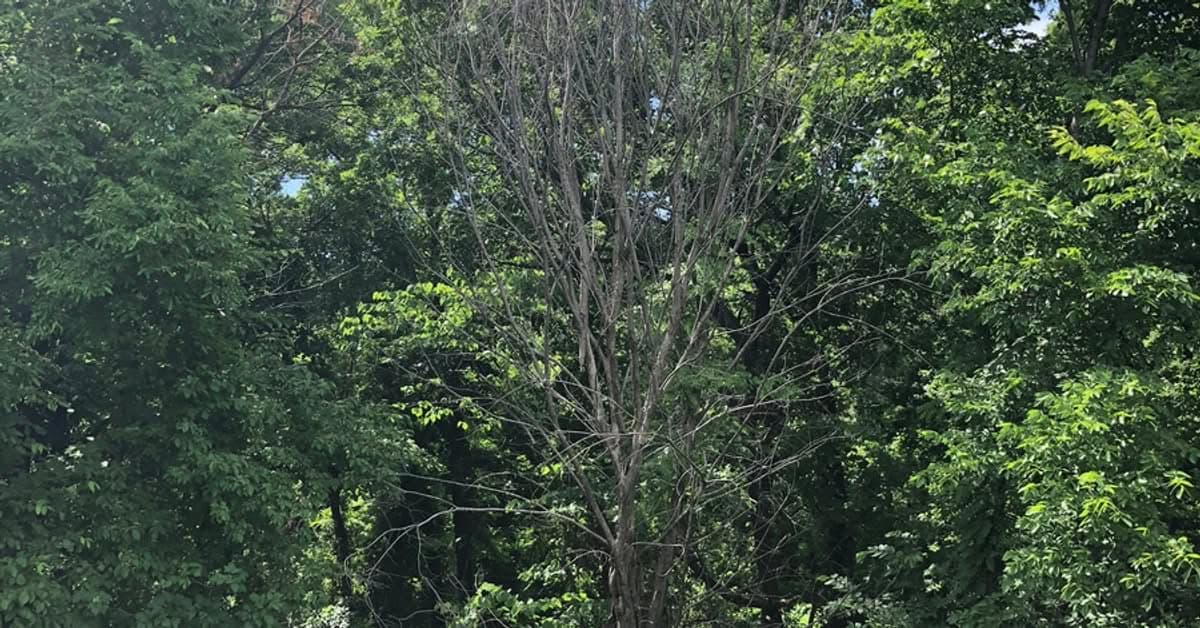
Professional Evaluation of Tree Decline, Pests, Disease Indicators, Roots, Soil Conditions, and Environmental Stress
Trees often show symptoms long before the underlying cause is understood.
A thinning crown, yellow leaves, premature leaf drop, branch dieback, fungal fruiting structures, bark abnormalities, reduced growth, or insect activity may indicate a problem—but the visible symptom is not always the primary cause.
Davis Family Arbor Services provides professional tree health evaluations throughout Tulsa, Broken Arrow, Jenks, Bixby, Sapulpa, and surrounding Oklahoma communities.
Evaluations are led by Brad Davis, ISA Board Certified Master Arborist® MW-6328B, ISA Tree Risk Assessment Qualified, and ISA Florida Chapter Prescription Pruning Qualified.
Tree health evaluations are available for:
- Homeowners
- Commercial property owners
- HOAs
- Municipalities
- Public agencies
- Parks and campuses
- Property managers
- Developers
- Architects and engineers
- Attorneys
- Insurance professionals
- Estate and legacy properties
- Other managed landscapes
A professional tree health evaluation may help determine:
- What symptoms are present
- Which tree systems appear affected
- What factors may be contributing to decline
- Whether insects, disease, roots, soil, weather, or site changes may be involved
- Whether laboratory or advanced diagnostic testing is appropriate
- Whether the tree appears suitable for treatment, monitoring, preservation, or removal
- Which actions should be prioritized
- When the tree should be reevaluated
Tree health evaluations are fee-based consulting services and are separate from free pruning or tree-removal estimates.
What Is a Tree Health Evaluation?
A tree health evaluation is a systematic assessment of the tree and the environment in which it is growing.
The evaluation may consider:
- Tree species
- Tree age or maturity class
- Crown density
- Foliage color and size
- Annual shoot growth
- Branch dieback
- Bark condition
- Trunk wounds
- Fungal fruiting structures
- Insect signs
- Root-flare development
- Visible roots
- Soil conditions
- Drainage
- Irrigation
- Planting depth
- Mulch
- Construction history
- Previous pruning
- Weather exposure
- Recent changes to the property
The objective is not simply to name a disease or prescribe a treatment.
The objective is to understand the likely causes and contributing factors well enough to develop reasonable management recommendations.
Tree Symptoms Are Not Always the Cause
Tree problems are frequently complex.
The same visible symptom may have several possible causes.
For example, yellow leaves may be associated with:
- Nutrient availability
- Alkaline soil
- Root damage
- Excess soil moisture
- Drought
- Herbicide injury
- Vascular dysfunction
- Pest activity
- Species characteristics
- Natural seasonal changes
Branch dieback may be associated with:
- Root loss
- Soil compaction
- Drought
- Construction
- Stem-girdling roots
- Vascular disease
- Insect activity
- Decay
- Storm damage
- Previous pruning
- Multiple interacting stressors
A fungal fruiting structure may indicate decay, but its significance depends on:
- The organism
- The tree species
- The location of the fruiting structure
- The tissues affected
- The extent of decay
- Tree condition
- Root and crown response
- Site use
- Nearby targets
A reliable evaluation considers the complete tree and site rather than diagnosing from one photograph or symptom.
What a Tree Health Evaluation Does—and Does Not Do
A tree health evaluation may:
- Document symptoms and signs
- Evaluate tree vitality
- Review site and management history
- Identify likely causes and contributing factors
- Recommend additional testing
- Develop management priorities
- Identify reasonable treatment or monitoring options
- Determine whether structural concerns require a separate tree risk assessment
- Establish baseline information for future comparison
A tree health evaluation does not:
- Guarantee that a tree will recover
- Guarantee that a recommended treatment will work
- Predict the exact future condition of the tree
- Eliminate all diagnostic uncertainty
- Automatically include laboratory testing
- Automatically include a formal tree risk rating
- Automatically include advanced diagnostic testing
- Determine insurance coverage
- Establish legal liability
- Replace ongoing monitoring
Trees are living organisms responding to changing biological and environmental conditions.
Recommendations are based on the information reasonably available at the time of the evaluation.
When Should You Request a Tree Health Evaluation?
A professional evaluation may be appropriate when you observe:
- Thinning canopy
- Reduced foliage density
- Yellow or pale leaves
- Interveinal chlorosis
- Small leaves
- Premature fall color
- Early leaf drop
- Branch-tip dieback
- Dead branches
- Sparse annual growth
- Bark cracking or sloughing
- Oozing or wet areas on the trunk
- Fungal fruiting structures
- Insect holes or galleries
- Sawdust-like material or frass
- Unusual sprouting on the trunk or branches
- Root-flare abnormalities
- Surface roots causing concern
- Changes following construction
- Decline following drought, flooding, freeze, or storm damage
- A tree that appears different from nearby trees of the same species
- A high-value tree that you want to manage proactively
An evaluation may also be appropriate before symptoms appear when:
- Construction is planned near mature trees
- A property contains significant trees
- A new property is being purchased
- A preservation plan is needed
- A municipal or HOA tree-management program is being developed
- Baseline documentation is important
- A species is vulnerable to a known regional pest or disease
- Long-term tree care is a priority
Our Tree Health Evaluation Process
1. Define the Concern and Scope
The evaluation begins by identifying:
- Which tree or trees are included
- What changes have been observed
- When symptoms began
- Whether symptoms are progressing
- What work has occurred nearby
- Previous treatments
- Irrigation practices
- Pruning history
- Construction history
- Client objectives
- Whether written documentation is required
The scope may involve one tree, a group of trees, or an entire managed property.
2. Review the Tree and Site History
Tree health can be affected by events that occurred months or years earlier.
Relevant history may include:
- Planting
- Transplanting
- Grading
- Construction
- Utility installation
- Irrigation changes
- Drainage changes
- Drought
- Flooding
- Ice storms
- Lightning
- Vehicle impacts
- Previous pruning
- Fertilization
- Herbicide use
- Pest-control treatments
- Changes in surrounding trees or structures
Historical information helps distinguish recent symptoms from longer-term decline.
3. Evaluate the Crown
The crown may be evaluated for:
- Density
- Live crown ratio
- Foliage color
- Leaf size
- Annual growth
- Branch-tip dieback
- Distribution of dead branches
- Epicormic or adventitious shoots
- Flowering or fruiting patterns
- Insect feeding
- Foliar disease symptoms
- Storm damage
- Previous pruning
Crown symptoms may indicate stress, but they do not always identify where the problem originated.
4. Evaluate the Trunk and Branches
The trunk and branches may be inspected for:
- Wounds
- Cracks
- Cavities
- Cankers
- Bark abnormalities
- Oozing
- Fungal fruiting structures
- Insect entry or exit holes
- Previous pruning cuts
- Mechanical injury
- Lightning damage
- Included bark
- Weak branch unions
- Response growth
- Decay indicators
Structural concerns identified during a health evaluation may require a separate tree risk assessment or advanced structural evaluation.
5. Evaluate the Root Flare and Root Zone
The evaluation may include:
- Root-flare visibility
- Planting depth
- Mulch depth
- Excess soil
- Stem-girdling roots
- Visible root injury
- Soil compaction
- Drainage
- Irrigation
- Grade changes
- Pavement conflicts
- Construction activity
- Trenching
- Restricted rooting space
- Recent soil disturbance
Below-ground problems may contribute to canopy symptoms even when the roots cannot be directly observed.
6. Evaluate Potential Pests and Diseases
The evaluation considers whether symptoms or signs are consistent with:
- Insects
- Mites
- Fungal diseases
- Bacterial diseases
- Vascular diseases
- Root and butt decay
- Foliar disease
- Cankers
- Abiotic disorders
- Multiple interacting factors
A suspected pest or disease should not be treated as confirmed unless the available evidence supports the identification.
Laboratory testing may be recommended when confirmation is important to the management decision.
7. Develop Management Recommendations
Recommendations may include:
- Monitoring
- Irrigation changes
- Mulch correction
- Soil testing
- Foliar analysis
- Root-zone improvement
- Root Collar Excavation (RCX)
- AirSpade root investigation
- Prescription pruning
- Pest or disease treatment
- Nutrient management
- Plant growth regulation
- Advanced diagnostics
- Tree risk assessment
- Laboratory testing
- Removal
- No immediate action
Not every tree requires treatment.
In some cases, monitoring and correction of site conditions may be more appropriate than chemical intervention.
Crown and Foliage Evaluation
Changes in the crown may provide useful information about tree vitality.
Potential indicators include:
- Reduced crown density
- Smaller leaves
- Chlorosis
- Scorch
- Premature fall color
- Early leaf drop
- Branch-tip dieback
- Reduced shoot extension
- Abnormal flowering or fruiting
- Epicormic growth
- Uneven or one-sided decline
These symptoms should be interpreted in relation to:
- Species
- Season
- Weather
- Soil moisture
- Root condition
- Construction
- Pest pressure
- Tree age
- Normal species characteristics
For example, seasonal leaf drop during heat or drought does not automatically mean a tree is dying. Conversely, a tree with a full crown may still contain important structural defects or root problems.
Root and Soil Conditions
Roots require an appropriate balance of:
- Oxygen
- Water
- Soil volume
- Pore space
- Suitable temperature
- Nutrient availability
- Physical stability
Tree health may be affected by:
- Soil compaction
- Poor drainage
- Excess irrigation
- Drought
- Restricted rooting space
- Buried root flares
- Stem-girdling roots
- Fill soil
- Grade changes
- Excavation
- Root severance
- Pavement
- Construction traffic
- Excess mulch
- Soil chemistry
- Salts or contaminants
A soil problem cannot always be corrected by adding fertilizer.
The appropriate recommendation depends on what is limiting root function.
Root Collar Excavation (RCX)
Root Collar Excavation may be recommended when the root flare is buried or important root-collar conditions cannot be adequately evaluated from the surface.
RCX may help identify:
- Stem-girdling roots
- Buried root flares
- Excess soil or mulch
- Root-collar wounds
- Decay indicators
- Construction damage
- Abnormal root development
- Improper planting depth
RCX may be performed using compressed-air excavation to reduce the likelihood of severing woody roots compared with conventional digging.
The excavation exposes selected areas. It does not reveal the entire root system.
AirSpade Root Investigation
AirSpade excavation uses compressed air to loosen and remove suitable soil from selected root areas.
It may support investigation of:
- Root location
- Root depth
- Root condition
- Construction damage
- Root severance
- Stem-girdling roots
- Soil layering
- Excess fill
- Compaction
- Root-flare development
Air excavation is minimally disruptive rather than completely non-invasive.
Fine roots may be exposed or disturbed, and excavation should be performed with attention to soil moisture, air pressure, nozzle distance, root exposure, utilities, and post-excavation care.
Advanced Tree Diagnostics
When visual inspection cannot adequately answer an important health or structural question, advanced methods may be recommended.
Arbotom® Sonic Tomography
Sonic tomography evaluates relative stress-wave patterns across a selected trunk or branch cross-section.
It may help investigate areas associated with:
- Decay
- Cavities
- Cracks
- Altered wood
- Internal discontinuities
A tomogram is not an X-ray and does not independently determine whether a tree should be removed.
Resistograph® Resistance Drilling
Resistance drilling records drilling resistance along a selected path through wood.
It may help evaluate:
- Relative wood density
- Cavities
- Cracks
- Decay
- Remaining wood along the drilling path
Resistance drilling is minimally invasive and evaluates a narrow pathway rather than the entire tree.
ArboRadix® Root Detection
ArboRadix® is used with the Arbotom® sensor system to investigate probable locations of significant roots within selected areas.
It may support:
- Construction planning
- Utility routing
- Hardscape planning
- Root investigation
- Tree Protection Zone development
- Evaluation of possible root conflicts
It does not map every root or independently determine root health.
Laboratory Testing
Laboratory testing may be recommended for:
- Fungal identification
- Plant-pathogen analysis
- Soil analysis
- Foliar nutrient analysis
- Herbicide screening
- Insect identification
- Other assignment-specific questions
A laboratory result should be interpreted in relation to the tree and site rather than considered in isolation.
Insect Evaluation
Not every insect found on a tree requires treatment.
Many insects are:
- Beneficial
- Incidental
- Temporary
- Secondary to another stress
- Present below a damaging threshold
Evaluation may consider:
- Insect species
- Life stage
- Host tree
- Population level
- Type of damage
- Time of year
- Tree vitality
- Expected progression
- Natural predators
- Treatment options
- Potential effects on pollinators and other organisms
Potential signs of insect activity may include:
- Exit holes
- Entry holes
- Galleries
- Frass
- Sawdust-like material
- Webbing
- Leaf feeding
- Scale coverings
- Honeydew
- Sooty mold
- Bark splitting
- Woodpecker activity
- Canopy thinning
- Branch dieback
Correct identification is essential because similar signs may be produced by different insects or non-insect causes.
Emerald Ash Borer Evaluation
Ash trees may be evaluated for indicators consistent with Emerald Ash Borer activity, including:
- Crown thinning
- Upper-crown dieback
- D-shaped exit holes
- Bark splitting
- S-shaped larval galleries
- Epicormic shoots
- Woodpecker activity
- Progressive decline
These signs are not always visible during early infestation, and some may be caused by native borers or other stresses.
Management recommendations may depend on:
- Confirmation or likelihood of infestation
- Tree condition
- Amount of canopy decline
- Tree size
- Site use
- Treatment history
- Tree value
- Nearby ash populations
- Available treatment options
- Removal feasibility
Preventive treatment generally provides more management options than waiting for advanced decline.
Regulated insecticide treatment should be performed only by an appropriately licensed applicator and according to the product label.
Elm Health Evaluation
Elm decline may involve:
- Dutch Elm Disease
- Elm yellows
- Root damage
- Drought
- Soil compaction
- Herbicide injury
- Cankers
- Borers
- Other vascular or environmental disorders
Possible symptoms may include:
- Branch flagging
- Wilting
- Yellowing
- Premature leaf drop
- Vascular discoloration
- Progressive crown decline
Visual symptoms alone may not confirm the cause.
Laboratory analysis, inspection of vascular tissue, root relationships, species identification, site history, and symptom progression may be needed before management recommendations are made.
Oak Health Evaluation
Oak decline may result from combinations of:
- Drought
- Heat
- Freeze injury
- Root damage
- Construction
- Soil compaction
- Drainage problems
- Defoliation
- Cankers
- Borers
- Root or butt decay
- Mechanical injury
- Other environmental stressors
Potential signs include:
- Crown thinning
- Branch dieback
- Small leaves
- Premature leaf drop
- Bark sloughing
- Fungal fruiting structures
- Epicormic growth
- Reduced annual growth
- Insect activity
- Root-flare abnormalities
Oak decline should not be attributed to a specific disease without adequate evidence.
Management should be based on the diagnosed or most likely contributing factors rather than treating all declining oaks the same way.
Nutrient Deficiency Evaluation
Yellow or pale foliage does not automatically mean the tree needs fertilizer.
Nutrient-related symptoms may be influenced by:
- Soil pH
- Nutrient availability
- Root function
- Soil moisture
- Drainage
- Compaction
- Species sensitivity
- Root injury
- Previous fertilizer use
- Herbicide exposure
- Disease
Evaluation may include:
- Symptom pattern
- Leaf age affected
- Species
- Soil conditions
- Soil testing
- Foliar analysis
- Root-zone evaluation
- Management history
Nutrient management should address the identified limitation.
Applying the wrong nutrient may provide little benefit and may create unnecessary growth or environmental concerns.
Soil and Foliar Testing
Soil testing may provide information about:
- pH
- Nutrient levels
- Soluble salts
- Organic matter
- Texture
- Other measured soil characteristics
Foliar analysis may help evaluate the nutrient content of tree foliage.
These tests do not independently diagnose every tree-health problem.
Results should be interpreted with:
- Tree symptoms
- Species
- Root conditions
- Soil moisture
- Site history
- Previous treatments
- Irrigation
- Construction impacts
- Other observations
Testing is most useful when the result is reasonably likely to affect the recommendation.
Fungal Fruiting Structures and Decay
Mushrooms, conks, brackets, and other fungal fruiting structures may indicate decay of:
- Roots
- Buttress roots
- Root collar
- Trunk wood
- Branch wood
- Dead organic material in the soil
The presence of a fruiting structure does not by itself determine:
- The extent of decay
- The amount of remaining wood
- Likelihood of failure
- Whether the tree must be removed
- Whether nearby trees are affected
Evaluation may require:
- Identification of the organism
- Inspection of the host tissue
- Root Collar Excavation
- Sonic tomography
- Resistance drilling
- Laboratory analysis
- Formal tree risk assessment
- Monitoring
Some decay organisms are associated with important structural concerns, while others primarily colonize dead or already compromised tissues.
Construction-Related Tree Decline
Construction may affect trees through:
- Root severance
- Soil compaction
- Fill placement
- Grade changes
- Drainage changes
- Utility trenching
- Pavement installation
- Equipment impacts
- Trunk or branch injury
- Irrigation disruption
- Loss of neighboring trees
- Changes in wind exposure
Symptoms may appear during construction or emerge gradually months or years later.
A post-construction health evaluation may include:
- Review of construction history
- Comparison with pre-construction records
- Root-zone inspection
- Soil evaluation
- Root detection or excavation
- Tree health measurements
- Photographic documentation
- Monitoring recommendations
- Tree risk assessment where structural concerns are present
Timing alone does not prove that construction caused the decline. Other reasonable contributing factors should also be considered.
Tree Health Evaluation Versus Tree Risk Assessment
A tree health evaluation and a tree risk assessment answer different questions.
Tree Health Evaluation
A tree health evaluation focuses on:
- Vitality
- Symptoms
- Pests
- Diseases
- Roots
- Soil
- Environmental stress
- Treatment and management options
Tree Risk Assessment
A tree risk assessment focuses on:
- Potential failure scenarios
- Likelihood of failure
- Likelihood of impact
- Consequences
- Overall risk rating
- Risk-mitigation options
A tree may be unhealthy without presenting elevated risk.
A tree may also appear healthy while containing structural defects that warrant risk assessment.
The services may be combined when both health and structural-risk questions need to be addressed.
Treatment Recommendations
Depending on the findings, recommendations may include:
- Monitoring
- Irrigation modification
- Mulch correction
- Soil management
- Root-zone protection
- Root Collar Excavation
- AirSpade investigation
- Vertical mulching
- Prescription pruning
- Nutrient management
- Pest management
- Disease management
- Trunk injection
- Soil-applied treatment
- Plant growth regulation
- Laboratory testing
- Advanced diagnostics
- Supplemental support evaluation
- Tree risk assessment
- Removal
Treatment should not be recommended merely because a product or service is available.
The expected benefit should be considered in relation to:
- Diagnosis
- Tree condition
- Treatment timing
- Site limitations
- Cost
- Tree value
- Client objectives
- Treatment risks
- Likelihood of response
- Reasonable alternatives
Regulated pesticide and plant-growth-regulator applications must be performed by appropriately licensed applicators and according to product labels. Davis Family Arbor Services will not advertise or provide regulated pesticide applications until the required licensing is active.
Monitoring and Reassessment
Tree health can change over time.
Monitoring may be recommended when:
- Diagnosis remains uncertain
- Symptoms are mild
- The tree is expected to respond slowly
- A treatment has been performed
- Construction impacts may develop gradually
- Known decay or disease is being managed
- A high-value tree is being preserved
- Seasonal comparison is useful
- Removal is not currently warranted
Reassessment timing depends on:
- Tree condition
- Species
- Diagnosis
- Site use
- Treatment
- Weather
- Construction
- Expected rate of change
- Client objectives
Earlier reevaluation may be appropriate after:
- Severe storms
- Lightning
- Flooding
- Drought
- Construction
- Root disturbance
- Rapid canopy decline
- New fungal fruiting structures
- New cracks or movement
- Branch or whole-tree failure
- Significant changes in site use
Written Tree Health Reports
Depending on the agreed scope, the deliverable may include:
- Verbal consultation
- Brief written summary
- Tree-by-tree recommendations
- Photographic documentation
- Formal tree health report
- Property-level management plan
- Monitoring schedule
- Treatment specifications
- Referral for laboratory testing
- Recommendation for advanced diagnostics
- Recommendation for formal tree risk assessment
A formal written report may include:
- Client and property information
- Assignment purpose
- Inspection date
- Tree identification
- Species
- Tree measurements
- Site conditions
- Tree history
- Symptoms and signs
- Diagnostic observations
- Photographs
- Likely causes
- Contributing factors
- Additional testing recommendations
- Management priorities
- Treatment or monitoring options
- Limitations
- Arborist credentials and signature
The written proposal identifies the agreed scope and deliverables before work begins.
Tree Health Evaluations for Municipalities and Public Agencies
Davis Family Arbor Services provides tree health consulting for:
- Municipalities
- Public agencies
- Parks
- Campuses
- Schools
- Public facilities
- Streetscapes
- Commercial properties
- HOAs
- Apartment communities
- Institutional properties
- Development projects
Assignments may include:
- Individual-tree evaluations
- Tree-population screening
- Decline investigations
- Pest and disease monitoring
- Construction-related evaluations
- Soil and root-zone assessment
- Written management recommendations
- Treatment prioritization
- Monitoring programs
- Budget planning
- Public-tree preservation
Municipal and institutional scopes are developed according to tree count, site use, management objectives, reporting needs, procurement requirements, and available budgets.
Professional Qualifications
Tree health evaluations are led by Brad Davis, whose qualifications include:
- ISA Board Certified Master Arborist® MW-6328B
- ISA Tree Risk Assessment Qualified
- ISA Florida Chapter Prescription Pruning Qualified
- Member, International Society of Arboriculture
- Member, American Society of Consulting Arborists
Evaluations are informed by:
- Tree biology
- Species characteristics
- Site-specific observations
- Current arboricultural research
- ISA Best Management Practices
- Applicable ANSI A300 Tree Care Standards
- Professional field experience
- Diagnostic testing when appropriate
- Laboratory information when available
A credential supports the evaluation, but a reliable diagnosis still requires careful inspection, appropriate evidence, and acknowledgment of reasonable uncertainty.
Fees, Scheduling, and Deliverables
Tree health evaluations are fee-based consulting services.
Fees depend on:
- Number of trees
- Property size
- Site complexity
- Tree size
- Symptoms
- History
- Required measurements
- Root or soil investigation
- Laboratory testing
- Advanced diagnostics
- Mapping
- Written reporting
- Intended use
- Travel
- Deadlines
A written proposal may identify:
- Included trees
- Evaluation scope
- Site visit
- Testing
- Deliverables
- Fees
- Payment terms
- Anticipated schedule
- Optional services
- Limitations
Report delivery timing depends on the number of trees, complexity, laboratory requirements, advanced testing, and report detail.
Expedited service may be available for agreed construction, municipal, legal, insurance, or real estate deadlines.
Service Area
Davis Family Arbor Services provides tree health evaluations throughout:
- Tulsa
- South Tulsa
- Broken Arrow
- Jenks
- Bixby
- Sapulpa
- Glenpool
- Sand Springs
- Tulsa County
- Wagoner County
- Surrounding northeastern Oklahoma communities
Statewide assignments may be considered for:
- Municipalities
- Public agencies
- Attorneys
- Insurance professionals
- Developers
- Commercial properties
- Institutions
- High-value or technically complex tree matters