Specialized Testing for Internal Wood Condition, Root Location, Root-Zone Concerns, Structural Defects, and Complex Tree Questions
A visual inspection provides enough information for many tree-management decisions.
Some trees, however, present questions that cannot be adequately resolved from visible symptoms alone.
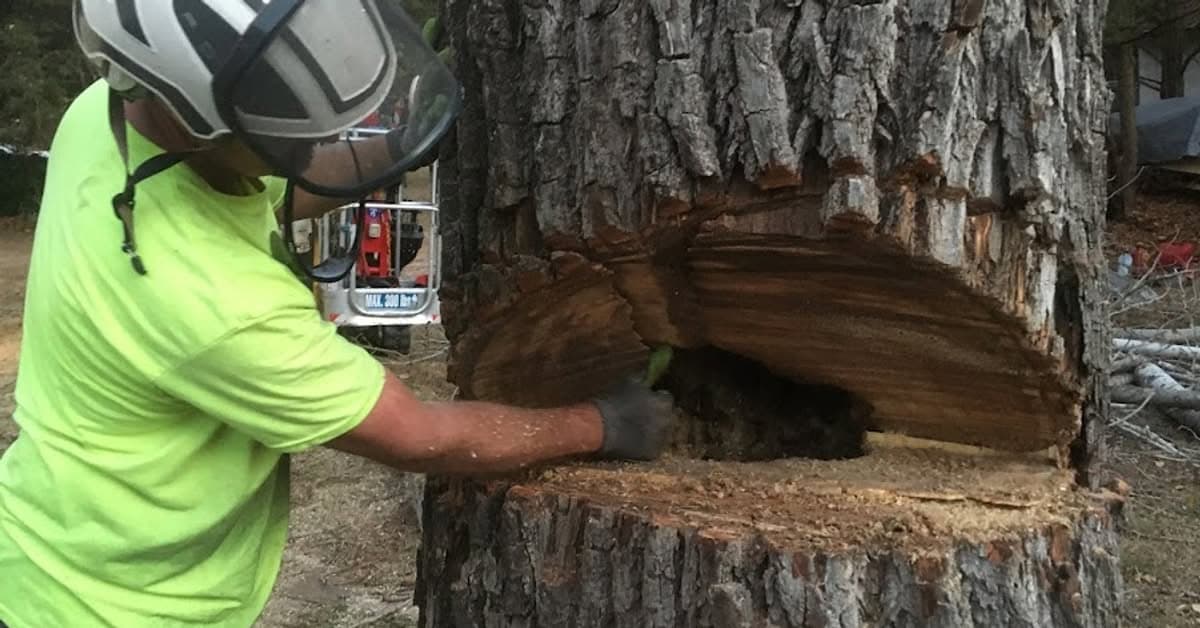
Internal decay, cavities, cracks, altered wood, buried root flares, root conflicts, construction damage, and other concealed conditions may require additional investigation before a reasonable preservation, mitigation, or removal decision can be made.
Davis Family Arbor Services provides advanced tree diagnostics throughout Tulsa, Broken Arrow, Jenks, Bixby, Sapulpa, and surrounding Oklahoma communities.
Testing and interpretation are led by Brad Davis, ISA Board Certified Master Arborist® MW-6328B and ISA Tree Risk Assessment Qualified.
Advanced diagnostic services are available for:
- Homeowners
- Commercial property owners
- HOAs
- Municipalities
- Public agencies
- Parks and campuses
- Developers
- Architects and engineers
- Property managers
- Attorneys
- Insurance professionals
- Historic and legacy properties
- Other managed landscapes
Available diagnostic capabilities include:
- Arbotom® Sonic Tomography
- Resistograph® Resistance Drilling
- ArboRadix® Root Detection
- AirSpade Root Investigation
- Root Collar Excavation (RCX)
- Aerial inspection
- Tree forensic investigation
- Laboratory and soil-testing coordination
- Detailed photographic and written documentation
Call (918) 818-3898 to discuss the tree, the management question, and which diagnostic methods may be appropriate.
Advanced tree diagnostics are fee-based consulting services and are separate from free tree-pruning or tree-removal estimates.
When Is Advanced Testing Appropriate?
Advanced testing may be appropriate when:
- A basic visual assessment identifies an important uncertainty
- Internal decay is suspected
- A cavity or crack cannot be adequately evaluated externally
- A fungal fruiting structure is present
- A tree has survived lightning, fire, vehicle impact, or storm damage
- A major wound may contain hidden decay
- Root location matters to a construction or utility project
- Root damage is suspected after excavation or grading
- A tree has been recommended for removal primarily because of an unverified internal concern
- A valuable or historically significant tree requires additional evidence before an irreversible decision
- A formal tree risk assessment requires more information
- An insurance, legal, municipal, or construction matter requires documented findings
- Tree condition needs to be monitored over time
Advanced testing should address a clearly defined question.
It is not automatically required because a tree is:
- Large
- Old
- Valuable
- Leaning
- Near a structure
- Visibly hollow
- Associated with a fungal fruiting structure
The additional information should be reasonably likely to affect the management recommendation.
Visual Assessment Comes First
Advanced diagnostics should usually be preceded by an appropriate visual and site evaluation.
Before recommending specialized testing, the arborist may consider:
- Tree species
- Tree size and form
- Crown condition
- Branch architecture
- Trunk and root-flare condition
- Cavities
- Cracks
- Wounds
- Fungal fruiting structures
- Root and soil conditions
- Construction history
- Previous pruning
- Storm exposure
- Targets
- Site use
- Client objectives
- Available records
- Whether the suspected condition can be reasonably assessed without instrumentation
The instrument should be selected to answer the question—not the other way around.
Our Advanced Diagnostic Services
Arbotom® Sonic Tomography
Arbotom® Sonic Tomography evaluates stress-wave travel through a selected cross-section of a trunk or major branch.
Sensors are positioned around the circumference of the tree at the testing level. Mechanical impulses are introduced at each sensor, and the system records how the stress waves travel between sensor locations.
The software uses those measurements to generate a color-coded tomogram representing relative stress-wave velocity patterns across the selected cross-section.
Tomography may help identify patterns consistent with:
- Cavities
- Cracks
- Internal discontinuities
- Decay
- Altered wood
- Changes associated with old wounds
- Areas that may warrant targeted confirmation
A tomogram is not:
- An X-ray
- A direct photograph
- A complete image of the tree
- A guarantee of structural performance
- A stand-alone tree-removal decision
- A formal tree risk rating
Each tomogram applies only to the tested cross-section and requires professional interpretation.
Resistograph® Resistance Drilling
A Resistograph® records drilling resistance as a thin needle travels through a selected path in the wood.
The instrument produces a graph showing relative resistance along the drilling pathway.
Resistance drilling may help evaluate:
- Relative wood density
- Possible cavities
- Possible cracks
- Decayed or altered wood
- Approximate transitions between higher- and lower-resistance areas
- Remaining wood along the selected drilling path
Each test evaluates a narrow pathway rather than the entire tree.
Resistance drilling is minimally invasive, not non-invasive. It creates a small-diameter wound and should therefore be limited to locations where the expected information justifies the testing.
ArboRadix® Root Detection
ArboRadix® is a specialized root-detection application used in conjunction with the Arbotom® sensor system.
It is not a stand-alone ground-penetrating-radar unit.
ArboRadix® uses the Arbotom® sensors and associated software to investigate probable locations of significant roots within selected areas around a tree.
Potential applications include:
- Construction planning
- Utility routing
- Sidewalk and driveway design
- Retaining-wall planning
- Hardscape installation
- Tree Protection Zone development
- Root-conflict evaluation
- Planning exploratory AirSpade trenches
- Construction tree preservation
- Root-related forensic investigations
ArboRadix® may help identify likely root locations, but it does not:
- Map every root
- Determine the health of every detected root
- Measure root strength
- Establish property ownership
- Replace a legal survey
- Guarantee root avoidance during excavation
- Determine whole-tree stability by itself
Physical verification may still be appropriate before excavation near important roots.
AirSpade Root Investigation
AirSpade excavation uses compressed air to loosen and remove suitable soil from selected areas while reducing the likelihood of severing woody roots compared with conventional excavation.
It may be used to investigate:
- Root location
- Root depth
- Root wounds
- Construction damage
- Root severance
- Stem-girdling roots
- Soil layering
- Excess fill
- Root-flare development
- Soil compaction
- Utility conflicts
- Root relationships near hardscape or structures
Air excavation is minimally disruptive rather than completely non-invasive.
Fine roots may be exposed or disturbed, and the work should account for:
- Soil moisture
- Air pressure
- Nozzle distance
- Root exposure
- Underground utilities
- Site restoration
- Post-excavation care
The excavation reveals selected areas rather than the entire root system.
Root Collar Excavation (RCX)
Root Collar Excavation is the careful removal of excess soil, mulch, or accumulated material around the base of the tree.
RCX may help evaluate:
- Buried root flares
- Stem-girdling roots
- Root-collar wounds
- Decay indicators
- Improper planting depth
- Excess mulch
- Construction fill
- Abnormal root development
- Buttress-root condition
RCX may be performed with compressed-air excavation when site and soil conditions are suitable.
The information may support:
- Tree health evaluation
- Tree risk assessment
- Root management
- Construction planning
- Long-term preservation
- Tree forensic investigation
Aerial Inspection
Some structural concerns cannot be adequately evaluated from the ground.
Aerial inspection may be recommended when important conditions involve:
- Major branch unions
- Cavities aloft
- Cracks
- Lightning damage
- Previous branch failures
- Suspended branches
- Supplemental support systems
- Decay in first-order branches
- Upper-crown storm damage
- Areas hidden from ground view
Aerial inspection may involve:
- Rope-based climbing
- Aerial-lift access
- Close-range photography
- Sounding
- Probing
- Measurement
- Drone imagery where appropriate
Drone imagery may provide useful overview information but does not replace close physical inspection when direct access is necessary.
Laboratory and Soil Testing
Laboratory testing may be recommended when visual symptoms alone cannot confirm the diagnosis.
Potential services include:
- Fungal identification
- Plant-pathogen analysis
- Insect identification
- Soil analysis
- Foliar nutrient analysis
- Herbicide screening
- Wood identification
- Other assignment-specific testing
Laboratory results should be interpreted in relation to:
- Tree symptoms
- Species
- Site history
- Root condition
- Soil moisture
- Construction
- Previous treatments
- Other field evidence
A laboratory result is one source of information rather than a complete tree-management recommendation by itself.
How the Diagnostic Process Works
1. Define the Management Question
Before testing begins, the client and arborist identify what decision the information is intended to support.
Examples include:
- Can this tree reasonably be retained?
- Is internal decay present at the suspected location?
- Does the tree need additional risk mitigation?
- Where are significant roots located near proposed excavation?
- Has construction likely affected the root zone?
- Is a removal recommendation supported by measured evidence?
- What should be monitored over time?
- Which areas require confirmatory testing?
A clearly defined question helps prevent unnecessary testing.
2. Select the Appropriate Method
Different methods answer different questions.
For example:
- Sonic tomography evaluates stress-wave patterns across a cross-section
- Resistance drilling evaluates wood resistance along a narrow pathway
- ArboRadix® investigates probable root locations
- AirSpade excavation physically exposes selected roots and soil
- RCX evaluates the root collar and planting depth
- Aerial inspection evaluates upper-tree defects directly
- Laboratory testing may identify organisms or measured soil and tissue conditions
More than one method may be needed for a complex assignment.
3. Perform the Field Investigation
Testing procedures are documented according to the assignment and may include:
- Testing locations
- Sensor placement
- Drilling direction
- Root-investigation lines
- Excavation areas
- Photographs
- Tree measurements
- Site conditions
- Visible defects
- Weather and soil conditions
- Instrument settings
- Other relevant observations
4. Interpret the Data
Diagnostic equipment produces measurements.
The arborist interprets those measurements in relation to:
- Tree species
- Tree geometry
- Wood anatomy
- Wound history
- Crown architecture
- Root and soil conditions
- Load direction
- Visible defects
- Site exposure
- Targets
- Other available evidence
5. Develop Recommendations
Depending on the assignment, recommendations may include:
- No immediate action
- Monitoring
- Repeat testing
- Prescription pruning
- Crown reduction
- Supplemental support evaluation
- Target management
- Access restriction
- Root-zone management
- Construction redesign
- Additional diagnostics
- Formal tree risk assessment
- Removal
The diagnostic result informs the recommendation but does not replace professional judgment.
Combining Diagnostic Methods
Complex tree questions are often better addressed through multiple lines of evidence.
Sonic Tomography and Resistograph® Testing
Tomography may identify broader patterns of altered stress-wave transmission across a selected cross-section.
Targeted resistance drilling may then evaluate wood resistance at selected points within or near those areas.
The methods are complementary:
- Tomography provides a broader cross-sectional model
- Resistograph® testing provides detailed information along selected paths
ArboRadix® and AirSpade Investigation
ArboRadix® may help identify probable root locations within selected areas.
AirSpade excavation may then physically verify:
- Root presence
- Root diameter
- Root depth
- Visible root condition
- Construction damage
- Soil conditions
This combination may reduce unnecessary excavation while supporting more precise construction planning.
RCX and Advanced Structural Evaluation
Root Collar Excavation may reveal:
- Stem-girdling roots
- Basal cavities
- Buried flares
- Decay indicators
- Root wounds
These findings may then support:
- Sonic tomography at the lower trunk
- Resistance drilling
- Root investigation
- Formal tree risk assessment
- Preservation planning
No single tool provides complete information about the entire tree.
Advanced Tree Diagnostics and Tree Risk Assessment
Advanced diagnostics may be used during a Level 3 tree risk assessment when a basic assessment identifies an uncertainty that could materially affect the risk or management recommendation.
Advanced diagnostics may help answer questions about:
- Internal wood condition
- Decay distribution
- Crack location
- Root location
- Root injury
- Basal defects
- Major branch attachments
- Construction impacts
- Changes over time
A formal tree risk assessment additionally evaluates:
- Specific failure scenarios
- Likelihood of failure
- Likelihood of impact
- Consequences
- Overall risk rating
- Mitigation options
- Residual risk
- Reassessment needs
Diagnostic equipment does not independently assign a tree risk rating.
Advanced Diagnostics for Tree Preservation
Advanced testing may help avoid decisions based solely on appearance.
A mature tree may contain:
- Historic wounds
- Localized decay
- Cavities
- Response growth
- Compartmentalized defects
- Structural adaptations
- Root conflicts
- Construction impacts
The presence of a defect does not automatically mean removal is required.
Likewise, healthy foliage does not confirm that the tree has no important structural or root concerns.
Measured information may support:
- Preservation
- Monitoring
- Prescription pruning
- Crown reduction
- Supplemental support
- Target management
- Construction redesign
- Root-zone protection
- Removal when supported by the broader evidence
Advanced diagnostics improve the available information but cannot guarantee future tree performance.
Advanced Diagnostics for Construction Projects
Construction-related tree preservation may require information about both above-ground and below-ground conditions.
Diagnostic services may support:
- Pre-construction tree evaluation
- Tree Protection Zone development
- Root detection
- Utility routing
- Hardscape design
- Foundation planning
- Retaining-wall placement
- Root-conflict evaluation
- Documentation of pre-existing conditions
- Post-construction decline investigation
- Root-loss analysis
- Construction monitoring
Potential methods include:
- ArboRadix® Root Detection
- AirSpade root investigation
- RCX
- Sonic tomography
- Resistance drilling
- Tree health evaluation
- Formal tree risk assessment
- Tree inventory and mapping
Early investigation generally provides more design and preservation options than testing after root damage has already occurred.
Advanced Tree Diagnostics for Tree Forensic Investigations
Specialized testing may support forensic assignments involving:
- Tree failure
- Branch failure
- Root-plate failure
- Construction damage
- Vehicle impact
- Lightning injury
- Fire exposure
- Root severance
- Historic wounds
- Disputed removal recommendations
- Insurance matters
- Legal disputes
- Municipal claims
Testing may document conditions in tree parts that remain available for examination.
It cannot reliably reconstruct material that has already been:
- Removed
- Chipped
- Burned
- Ground
- Discarded
- Substantially altered
Forensic interpretation may also require:
- Failure-surface examination
- Photography
- Measurements
- Weather history
- Maintenance records
- Construction documents
- Laboratory analysis
- Witness information
- Other available evidence
Advanced diagnostics are one part of the broader forensic investigation.
Monitoring Changes Over Time
Repeat testing may be useful when:
- A tree is being retained with known internal decay
- A high-value or historically significant tree is under long-term management
- Previous testing established a baseline
- A fungal decay organism is present
- A significant wound is being monitored
- Construction has occurred nearby
- Mitigation has been performed
- Root conflicts remain under observation
For meaningful comparison, follow-up testing should attempt to reproduce relevant procedures such as:
- Testing height
- Sensor configuration
- Drilling direction
- Root-investigation location
- Equipment settings
- Documentation methods
Natural growth, moisture, temperature, wound response, and measurement variation may affect comparisons.
Testing should not be represented as measuring an exact annual rate of decay or root decline unless the evidence genuinely supports that conclusion.
Advanced Diagnostics for Municipalities and Public Agencies
Davis Family Arbor Services provides advanced diagnostic consulting for:
- Municipalities
- Public agencies
- Parks
- Campuses
- Schools
- Historic properties
- Public facilities
- Streetscapes
- Roadways
- Commercial properties
- HOAs
- Development projects
- Institutional landscapes
Potential applications include:
- Evaluating mature public trees
- Supporting preservation decisions
- Investigating cavities or fungal activity
- Establishing monitoring baselines
- Evaluating trees near public-use areas
- Supporting formal tree risk assessments
- Documenting conditions before or after construction
- Investigating root conflicts
- Supporting board or public review
- Prioritizing management budgets
Project scope and deliverables are tailored to:
- Tree count
- Site use
- Management objectives
- Reporting needs
- Procurement requirements
- Construction schedules
- Public access
- Available budgets
What the Written Report May Include
Depending on the agreed scope, the report may include:
- Client and property information
- Assignment purpose
- Inspection date
- Tree identification
- Species
- Tree measurements
- Tree location
- Site and target information
- Visible defects and symptoms
- Tree and site history
- Testing methods
- Testing locations
- Sensor configurations
- Drilling paths
- Root-detection lines
- Excavation areas
- Photographs
- Tomograms
- Resistance profiles
- Root-detection findings
- Laboratory results
- Interpretation
- Management recommendations
- Reassessment recommendations
- Assumptions
- Limitations
- Arborist credentials and signature
Not every assignment requires every listed item.
The written proposal identifies:
- Included trees
- Diagnostic methods
- Testing locations
- Deliverables
- Fees
- Payment terms
- Anticipated schedule
- Optional services
- Assignment limitations
Limitations of Advanced Diagnostics
All diagnostic methods have limitations.
Sonic Tomography
Each tomogram represents one selected cross-section and may be influenced by:
- Tree geometry
- Species
- Sensor placement
- Moisture
- Temperature
- Cracks
- Cavities
- Bark thickness
- Irregular growth
- Software assumptions
Resistograph® Testing
Each test evaluates one narrow pathway and may be influenced by:
- Species anatomy
- Moisture
- Growth rings
- Drilling angle
- Needle condition
- Equipment settings
- Test-point selection
ArboRadix® Root Detection
Root detection may be influenced by:
- Root size
- Root depth
- Soil conditions
- Nearby utilities
- Pavement
- Root clustering
- Site geometry
- Testing configuration
It does not map every root.
AirSpade and RCX
Excavation findings apply only to the exposed areas.
Important roots or defects may exist outside the excavation.
Laboratory Testing
Results depend on:
- Sample quality
- Timing
- Handling
- Laboratory methods
- Detection limits
- Whether the sampled tissue contained the causal organism or substance
No diagnostic method can:
- Guarantee tree safety
- Predict exact failure timing
- Eliminate all uncertainty
- Determine legal liability
- Determine insurance coverage
- Replace professional interpretation
Professional Qualifications
Advanced diagnostic services are led by Brad Davis, whose qualifications include:
- ISA Board Certified Master Arborist® MW-6328B
- ISA Tree Risk Assessment Qualified
- ISA Florida Chapter Prescription Pruning Qualified
- Member, International Society of Arboriculture
- Member, American Society of Consulting Arborists
Findings are interpreted using:
- Tree biology
- Species characteristics
- Wood anatomy
- Root biology
- Tree architecture
- Site conditions
- ISA Tree Risk Assessment methodology
- Applicable ANSI A300 Tree Care Standards
- ISA Best Management Practices
- Current arboricultural research
- Professional field experience
- Other available evidence
The instruments provide measurements. Professional interpretation connects those measurements to the tree, site, and management question.
Fees, Scheduling, and Deliverables
Advanced tree diagnostics are fee-based professional consulting services.
Fees depend on:
- Number of trees
- Tree size
- Tree geometry
- Number of testing locations
- Number of tomograms
- Number of resistance-drilling paths
- ArboRadix® investigation area
- Excavation scope
- Aerial access
- Laboratory testing
- Mapping
- Reporting requirements
- Intended use
- Travel
- Deadlines
- Legal or municipal requirements
A written proposal may specify:
- Included trees
- Diagnostic methods
- Testing locations
- Anticipated test quantity
- Reporting format
- Fees
- Payment terms
- Schedule
- Optional services
- Limitations
Report delivery timing depends on:
- Project complexity
- Number of tests
- Data review
- Laboratory turnaround
- Mapping
- Documentation needs
- Current workload
Expedited service may be available for agreed construction, municipal, insurance, legal, or real estate deadlines.
Service Area
Davis Family Arbor Services provides advanced tree diagnostics throughout:
- Tulsa
- South Tulsa
- Broken Arrow
- Jenks
- Bixby
- Sapulpa
- Glenpool
- Sand Springs
- Tulsa County
- Wagoner County
- Surrounding northeastern Oklahoma communities
Statewide assignments may be considered for:
- Municipalities
- Public agencies
- Attorneys
- Insurance professionals
- Developers
- Commercial properties
- Historic properties
- Institutions
- High-value or technically complex trees