Professional Arboricultural Analysis for Attorneys, Insurers, Property Owners, Municipalities, and Other Parties Involved in Tree-Related Disputes
Tree-related legal matters often involve more than determining whether a tree was alive, damaged, defective, or valuable.
The assignment may require analysis of:
- Tree condition
- Failure mechanics
- Decay
- Root damage
- Construction impacts
- Pruning practices
- Tree ownership or boundary information supplied by other professionals
- Industry standards
- Reasonable tree-care practices
- Prior notice of defects
- Causation
- Tree value
- Mitigation options
- Available records and physical evidence
Davis Family Arbor Services provides expert-witness and litigation-consulting services throughout Tulsa and selected locations across Oklahoma.
Assignments are led by Brad Davis, ISA Board Certified Master Arborist® MW-6328B, ISA Tree Risk Assessment Qualified, and ISA Florida Chapter Prescription Pruning Qualified.
Services may support:
- Attorneys
- Insurance professionals
- Property owners
- Commercial clients
- Municipalities
- Public agencies
- HOAs
- Developers
- Contractors
- Property managers
- Real estate professionals
- Other retained parties
Depending on the assignment, services may include:
- Preliminary case review
- Site inspection
- Tree forensic investigation
- Document and photograph review
- Tree risk analysis
- Advanced diagnostic testing
- Written expert reports
- Technical consulting
- Affidavits or declarations
- Deposition preparation and testimony
- Hearing or trial testimony
- Rebuttal analysis
- Demonstrative exhibits
Call (918) 818-3898 to discuss the general nature of the matter, potential conflicts, deadlines, and scope of services.
An initial inquiry does not establish an expert-client relationship. Work begins only after conflict review, agreement on scope, and execution of an engagement agreement.
What Does an Expert Witness Arborist Do?
An expert witness arborist applies specialized education, training, credentials, field experience, recognized arboricultural practices, and case-specific evidence to questions involving trees and landscapes.
The expert’s role may include:
- Identifying the technical questions relevant to the assignment
- Reviewing available evidence
- Conducting an appropriate field investigation
- Applying recognized arboricultural methods
- Distinguishing observations from assumptions and opinions
- Evaluating reasonable alternative explanations
- Developing opinions supported by the available evidence
- Explaining methods, limitations, and conclusions clearly
- Communicating findings through reports, testimony, or consultation
- Revising opinions when meaningful new information becomes available
An expert witness is not retained merely to support a preferred outcome.
The expert’s opinions should remain within the expert’s area of competence and should be based on sufficient information, reliable methods, and reasonable application of those methods to the facts of the assignment.
Consulting Expert and Testifying Expert Roles
Legal counsel may retain an arborist in different capacities.
Consulting Expert
A consulting expert may assist counsel by:
- Reviewing allegations and defenses
- Identifying technical strengths and weaknesses
- Evaluating records and photographs
- Recommending additional investigation
- Reviewing opposing expert materials
- Assisting with deposition or cross-examination preparation
- Explaining arboricultural terminology and methods
- Helping counsel understand whether an expert opinion is reasonably supportable
Consulting experts may not be disclosed as testifying witnesses, depending on counsel’s strategy and applicable procedural rules.
Legal counsel determines the scope of protection, privilege, disclosure, and discovery. The arborist does not provide legal advice regarding those issues.
Testifying Expert
A testifying expert may be asked to:
- Conduct inspections
- Develop opinions
- Prepare a written report
- Produce supporting records
- Participate in depositions
- Respond to opposing expert opinions
- Testify at hearings or trial
- Explain technical evidence to a judge, jury, arbitrator, or administrative body
A testifying expert’s work may be subject to disclosure and discovery.
The expert should assume that notes, photographs, communications, data, calculations, prior drafts, and supporting information may be examined according to applicable law and procedural requirements.
Tree-Related Matters We May Evaluate
Tree Failure and Personal-Injury Matters
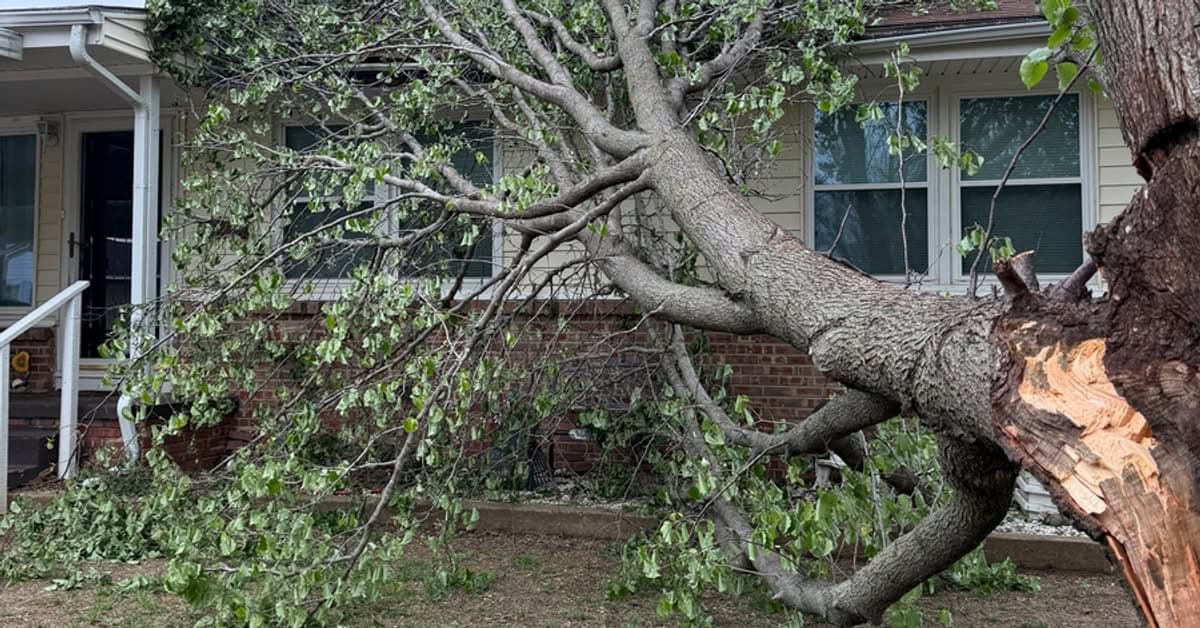
Tree or branch failures may involve questions such as:
- What part of the tree failed?
- What was the failure mode?
- Were visible defects present before failure?
- Was internal decay involved?
- Did weather contribute to the failure?
- Was the target foreseeable?
- Was the tree previously inspected?
- Were reasonable mitigation options available?
- Did pruning or site changes contribute?
- Can prior condition be reconstructed from the remaining evidence?
Potential evidence may include:
- Failure surfaces
- Remaining trunk or branches
- Root plates
- Photographs
- Maintenance records
- Inspection records
- Weather information
- Witness accounts
- Aerial imagery
- Prior site photographs
- Construction records
- Decay organisms
- Advanced diagnostic data
The arborist evaluates the available tree-related evidence. Questions of negligence, duty, liability, and legal causation are ultimately legal matters.
Property Damage and Neighbor Disputes
Tree-related property disputes may involve:
- Unauthorized cutting
- Tree removal across an apparent boundary
- Root severance
- Trunk damage
- Excessive pruning
- Topping
- Herbicide injury
- Contractor damage
- Falling branches
- Whole-tree failure
- Shared or boundary trees
- Encroaching branches or roots
- Damage to adjacent trees during construction
An arborist may document tree condition, injury, management implications, and potential loss.
Legal ownership and property boundaries should be established through deeds, surveys, title information, or qualified legal and surveying professionals.
Construction-Related Tree Damage
Construction cases may involve:
- Root severance
- Soil compaction
- Trenching
- Grade changes
- Fill placement
- Drainage alterations
- Pavement installation
- Equipment impacts
- Trunk and branch wounds
- Violation of Tree Protection Zones
- Failure to follow preservation specifications
- Delayed decline after construction
- Loss of trees designated for preservation
Investigations may include:
- Pre-construction documentation review
- Tree inventories
- Construction drawings
- Tree-protection plans
- Daily logs
- Contractor photographs
- Site inspection
- Root investigation
- ArboRadix® root detection
- AirSpade excavation
- Root Collar Excavation (RCX)
- Soil evaluation
- Tree health assessment
- Advanced diagnostics
- Timeline analysis
Construction-related symptoms may develop during the project or emerge months or years later. Timing alone does not establish causation, and other reasonable contributing factors should be considered.
Tree-Service Standard-of-Care Matters
Assignments may involve allegations concerning:
- Improper pruning
- Topping
- Flush cuts
- Excessive live-crown removal
- Lion-tailing
- Incorrect branch reduction
- Climbing-spike wounds
- Failure to recognize observable defects
- Inappropriate cabling or bracing
- Tree damage during removal operations
- Failure to protect adjacent trees
- Inadequate work specifications
- Failure to follow a defined scope
- Utility-clearance practices
Evaluation may consider:
- Applicable ANSI A300 Tree Care Standards
- ISA Best Management Practices
- Written contracts and proposals
- Pruning objectives
- Work specifications
- Photographs
- Tree response
- Timing
- Species
- Site conditions
- Industry practices applicable to the assignment
A standard does not automatically establish legal duty or negligence. Its relevance depends on the facts, agreement, jurisdiction, and legal questions identified by counsel.
Insurance Matters
Tree-related insurance assignments may involve:
- Storm damage
- Pre-loss condition
- Post-loss condition
- Emergency mitigation
- Tree failure
- Property damage
- Coverage disputes
- Scope disputes
- Tree valuation
- Causation questions
- Reasonableness of tree-service charges
- Documentation of emergency conditions
Davis Family Arbor Services provides arboricultural analysis and documentation.
We do not:
- Determine policy coverage
- Interpret insurance contracts
- Act as a public adjuster
- Guarantee reimbursement
- Decide whether a claim should be paid
Those matters remain with the policyholder, carrier, adjuster, counsel, and court or other decision-maker.
Municipal and Public-Property Matters
Assignments may involve:
- Public-tree failures
- Street-tree disputes
- Right-of-way trees
- Park and campus trees
- Contractor damage
- Vehicle impacts
- Utility work
- Construction projects
- Tree inventories
- Inspection programs
- Maintenance practices
- Public access and target management
- Tree valuation
- Risk-management policies
Municipal matters may also involve ordinances, agency procedures, contracts, inspection records, budgets, staffing, and statutory considerations beyond the arborist’s role.
Tree Appraisal and Valuation Matters
Tree-related disputes may require opinions concerning:
- Replacement cost
- Trunk Formula Technique
- Cost of cure
- Cost of repair or restoration
- Loss of function
- Post-loss reconstruction
- Landscape restoration
- Tree-related damages claimed by a party
Tree appraisal is a specialized, separately scoped service.
Tree value is not automatically equivalent to:
- Legal damages
- Real-property diminution
- Statutory damages
- Insurance coverage
- Replacement cost at mature size
- Removal cost
Legal counsel and other qualified professionals determine how an appraisal opinion relates to recoverable damages or other legal remedies.
Tree-appraisal services should not be advertised as currently available until the applicable Tree and Plant Appraisal Qualification has been completed.
Tree Forensic Investigations
A tree forensic investigation examines physical and documentary evidence to help determine what likely occurred and which factors may have contributed.
Potential assignments include:
- Branch failure
- Trunk failure
- Uprooting
- Root-plate failure
- Construction damage
- Vehicle impact
- Lightning injury
- Fire damage
- Herbicide injury
- Improper pruning
- Root severance
- Tree death
- Delayed decline
- Disputed maintenance history
A forensic investigation may include:
- Detailed site inspection
- Failure-surface examination
- Trunk and stump measurements
- Root-plate documentation
- Photography and videography
- Drone imagery where appropriate
- Weather-history review
- Construction-history review
- Records review
- Interviews or witness information supplied through counsel
- Laboratory testing
- Advanced diagnostics
- Comparison with scientific and industry literature
The strength of an opinion depends on the quantity, quality, preservation, and reliability of the available evidence.
Evidence Preservation
Tree-related evidence can be altered or destroyed quickly.
Important evidence may include:
- The failed branch or trunk
- The failure surface
- The stump
- Roots
- Decayed wood
- Fungal fruiting structures
- Soil conditions
- Construction damage
- Wounded bark
- Photographs
- Videos
- Maintenance records
- Contracts and proposals
- Emails and text messages
- Inspection reports
- Weather records
- Site plans
- Surveys
- Tree inventories
- Removed wood sections
When litigation or an insurance dispute is reasonably anticipated:
- Photograph the tree and site before cleanup when safe
- Preserve wide-angle and close-up images
- Record dates and locations
- Preserve the failure surface
- Measure the trunk or stump before grinding
- Avoid discarding significant wood sections
- Save communications and records
- Document who handled or moved evidence
- Consult legal counsel before destructive testing or disposal
Life safety takes priority.
A dangerous tree or branch should not be left uncontrolled solely to preserve evidence. When emergency mitigation is necessary, photographs, measurements, samples, and retained sections may help preserve information before disposal.
Site Inspection
A legal or forensic site inspection may document:
- Tree species
- Tree dimensions
- Tree location
- Crown condition
- Trunk and branch defects
- Root flare
- Visible roots
- Soil and drainage
- Targets
- Site use
- Property features
- Construction activity
- Wounds
- Decay
- Failure surfaces
- Remaining tree portions
- Nearby trees
- Access and visibility limitations
Inspection scope depends on:
- The legal questions
- Available evidence
- Safety
- Site access
- Whether the tree remains standing
- Whether destructive testing is authorized
- Whether other parties will attend
- Applicable court or discovery requirements
The arborist should not enter property without appropriate authorization.
Document and Record Review
Legal assignments may require review of:
- Pleadings
- Discovery responses
- Depositions
- Photographs
- Videos
- Tree-service proposals
- Contracts
- Invoices
- Inspection reports
- Arborist reports
- Engineering reports
- Surveys
- Site plans
- Construction drawings
- Municipal records
- Maintenance logs
- Weather data
- Insurance documentation
- Emails
- Text messages
- Opposing expert reports
- Scientific literature
- Industry standards and best practices
The expert should identify which materials were reviewed and distinguish reviewed evidence from information that was unavailable or assumed.
Advanced Diagnostic Services for Legal Matters
Advanced testing may be useful when additional measured information could materially affect the analysis.
Arbotom® Sonic Tomography
Sonic tomography evaluates stress-wave patterns across a selected trunk or branch cross-section.
It may support evaluation of:
- Internal decay
- Cavities
- Cracks
- Altered wood
- Remaining tree portions
- Conditions disputed by the parties
A tomogram is not an X-ray, direct photograph, or automatic removal decision.
Resistograph® Resistance Drilling
Resistance drilling records drilling resistance along a selected path through wood.
It may help evaluate:
- Relative wood density
- Cavities
- Cracks
- Decayed or altered wood
- Remaining wood along the test path
Testing is minimally invasive and evaluates a narrow pathway rather than the entire tree.
ArboRadix® Root Detection
ArboRadix® is used in conjunction with the Arbotom® sensor system to investigate probable locations of significant roots within selected areas.
It may support:
- Construction-damage analysis
- Utility-conflict analysis
- Root-loss investigations
- Tree Protection Zone matters
- Hardscape and excavation disputes
It does not identify every root or independently determine root health, ownership, or whole-tree stability.
AirSpade Root Investigation and RCX
Compressed-air excavation may expose selected roots and root-collar areas while reducing the likelihood of severing woody roots compared with conventional excavation.
It may document:
- Root severance
- Stem-girdling roots
- Buried root flares
- Construction impacts
- Root wounds
- Decay indicators
- Soil layering
- Excess fill
- Root location
Findings are limited to the areas exposed.
Laboratory Testing
Laboratory services may be recommended for:
- Fungal identification
- Plant-pathogen analysis
- Soil analysis
- Nutrient analysis
- Herbicide screening
- Wood identification
- Other assignment-specific questions
Laboratory capabilities, sample quality, chain of custody, detection limits, and interpretation limitations should be considered before testing.
Developing Expert Opinions
An expert opinion should distinguish among:
- Direct observations
- Measurements
- Records supplied by others
- Assumptions
- Scientific or technical principles
- Inferences
- Opinions
- Unresolved uncertainties
Depending on the assignment, the analysis may consider:
- Tree biology
- Species characteristics
- Tree structure
- Failure mechanics
- Decay processes
- Weather
- Site conditions
- Target occupancy
- Construction impacts
- Pruning history
- Industry standards
- Accepted management practices
- Alternative explanations
- Limitations of available evidence
An opinion may change when meaningful new evidence becomes available.
An expert should not present greater certainty than the evidence supports.
Causation and Contributing Factors
Tree outcomes commonly result from more than one factor.
For example, a failure may involve a combination of:
- Decay
- Poor branch architecture
- Root loss
- Saturated soil
- Wind
- Previous pruning
- Construction
- Species characteristics
- Crown exposure
- Tree age
- Changes in site use
A tree may fail during a storm without weather being the only relevant factor. Conversely, the presence of a defect does not prove that the defect caused the event.
The analysis should consider:
- Timing
- Mechanism
- Location
- Severity
- Alternative causes
- Pre-existing conditions
- Intervening events
- Evidence supporting or contradicting each explanation
Legal causation standards are determined by the jurisdiction and counsel. The arborist provides technical analysis within the arboricultural scope.
Applicable Standards and Professional References
Depending on the assignment, analysis may consider:
- ANSI A300 Tree Care Standards
- ANSI Z133 Safety Requirements for Arboricultural Operations
- ISA Best Management Practices
- ISA Tree Risk Assessment methodology
- Current tree- and plant-appraisal guidance
- Municipal ordinances and specifications
- Project contracts
- Tree-protection plans
- Peer-reviewed research
- Authoritative arboricultural literature
- Manufacturer instructions
- Product labels
- Applicable agency guidance
Not every standard applies to every assignment.
A standard should not be cited merely because it is related to trees. Its edition, scope, applicability, effective date, and relationship to the alleged conduct should be evaluated.
Written Expert Reports
Depending on the engagement and procedural requirements, an expert report may include:
- Expert qualifications
- Assignment scope
- Client and intended users
- Questions presented
- Materials reviewed
- Site-inspection information
- Methods
- Observations
- Measurements
- Photographs
- Diagnostic results
- Applicable standards or literature
- Analysis
- Opinions
- Assumptions
- Limitations
- Exhibits
- Signature
- Required disclosures
Report format may depend on:
- Jurisdiction
- Court rules
- Scheduling order
- Retaining counsel’s instructions
- Whether the expert will testify
- Nature of the proceeding
- Required disclosures
No report can be guaranteed to be accepted, admitted, or given a particular weight by a court, arbitrator, agency, insurer, or opposing party.
Rebuttal and Opposing-Expert Review
Davis Family Arbor Services may review opposing expert materials for:
- Factual inconsistencies
- Unsupported assumptions
- Method-selection concerns
- Calculation errors
- Misapplication of standards
- Unaddressed alternative explanations
- Incomplete inspection methods
- Unsupported certainty
- Differences between observations and conclusions
- Omitted evidence
- Scope limitations
A professional disagreement does not automatically mean another expert is unqualified or deceptive.
Rebuttal analysis should focus on:
- Methods
- Evidence
- Reasoning
- Applicability
- Limitations
- Technical conclusions
Depositions, Hearings, and Trial Testimony
Testimony services may include:
- Preparation meetings
- Review of case materials
- Deposition testimony
- Arbitration or mediation support
- Administrative hearings
- Court testimony
- Exhibit preparation
- Demonstrative graphics
- Supplemental analysis
Testimony availability depends on:
- Scheduling
- Jurisdiction
- Travel
- Deadlines
- Scope
- Conflict review
- Receipt of necessary materials
- Payment and retainer requirements
Fees commonly apply to all reserved testimony time, preparation, travel, waiting time, and related work as stated in the engagement agreement.
Demonstrative Exhibits
Clear visual exhibits may help explain technical tree issues.
Potential exhibits include:
- Annotated photographs
- Site diagrams
- Tree-location maps
- Failure-mechanism diagrams
- Timelines
- Tomograms
- Resistograph® profiles
- Root maps
- Construction-impact diagrams
- Tree-appraisal calculations
- Comparison photographs
- Pruning diagrams
- Target and impact illustrations
Exhibits should accurately represent the evidence and clearly identify when an image is illustrative rather than a direct measurement.
Expert Qualifications
Brad Davis provides expert-witness and legal consulting services with qualifications including:
- ISA Board Certified Master Arborist® MW-6328B
- ISA Tree Risk Assessment Qualified
- ISA Florida Chapter Prescription Pruning Qualified
- Member, International Society of Arboriculture
- Member, American Society of Consulting Arborists
Additional capabilities include:
- Tree forensic investigations
- Arbotom® Sonic Tomography
- Resistograph® Resistance Drilling
- ArboRadix® Root Detection
- AirSpade Root Investigation
- Root Collar Excavation (RCX)
- Tree risk assessment
- Prescription pruning analysis
- Construction tree consulting
- Written technical reporting
Brad Davis is actively pursuing additional professional education and qualifications. Current credentials should be stated accurately, without implying completion of a future credential or designation.
Independence, Objectivity, and Conflicts
Davis Family Arbor Services may also provide production tree services. Therefore, the firm should not claim that it never sells tree work or is universally independent from production recommendations.
For legal and expert assignments:
- The expert’s opinions are based on the agreed scope and available evidence
- Compensation is not contingent on the opinion or case outcome
- Potential conflicts are reviewed before acceptance
- Any relevant prior involvement should be disclosed
- Production work related to the subject tree may be declined, separated, or specifically addressed in the engagement agreement
- Counsel should determine whether any dual role creates legal or strategic concerns
Objectivity requires transparent disclosure and evidence-based analysis rather than a claim that no potential interest could ever exist.
Engagement and Conflict Review
Before accepting a legal assignment, Davis Family Arbor Services may request:
- Names of all parties
- Counsel and law firms
- Insurers
- Property address
- Case number
- Court or jurisdiction
- General subject matter
- Deadlines
- Known experts
- Prior involvement
- Requested services
Conflict review does not evaluate the merits of the case.
No confidential case information should be sent until the firm confirms that an appropriate conflict review can be performed and an engagement has been accepted.
Fees, Retainers, and Billing
Expert-witness and litigation-consulting services are fee-based professional engagements.
Fees may apply to:
- Initial case review
- Site inspections
- Travel
- Research
- Records review
- Diagnostic testing
- Report preparation
- Meetings
- Calls
- Exhibit preparation
- Deposition preparation
- Deposition testimony
- Hearing or trial preparation
- Testimony
- Waiting time
- Supplemental opinions
- Rebuttal reports
- File organization
- Administrative support
Legal engagements commonly require:
- An executed engagement agreement
- An advance retainer
- Replenishment of the retainer
- Payment before testimony or release of final work
- Separate rates for testimony, travel, rush work, or after-hours assignments
- Minimum billing increments
- Cancellation terms
Fees are not contingent upon:
- Case outcome
- Settlement
- Recovery
- Claim approval
- The substance of the expert opinion
Discounts offered for routine residential tree services do not apply to expert-witness or litigation work.
Scheduling and Deadlines
Legal assignments should be initiated as early as practical.
Time may be needed for:
- Conflict review
- Engagement
- Record collection
- Site access
- Inspection
- Evidence preservation
- Diagnostic testing
- Laboratory analysis
- Research
- Report preparation
- Counsel review for factual or procedural issues
- Rebuttal analysis
- Deposition preparation
Rush services may be available but cannot be guaranteed.
Late retention may limit:
- Investigation options
- Evidence quality
- Report detail
- Diagnostic availability
- Ability to meet deadlines
- Testimony availability
Counsel remains responsible for communicating all applicable deadlines and procedural requirements.
Service Area
Davis Family Arbor Services provides expert-witness and legal arboricultural consulting throughout:
- Tulsa
- Broken Arrow
- Jenks
- Bixby
- Sapulpa
- Glenpool
- Sand Springs
- Tulsa County
- Wagoner County
- Surrounding northeastern Oklahoma communities
Statewide Oklahoma assignments may be considered for:
- Attorneys
- Insurance professionals
- Municipalities
- Public agencies
- Developers
- Commercial properties
- Contractors
- Property owners
- Technically complex tree-related matters
Out-of-state assignments may be considered according to:
- Subject matter
- Jurisdiction
- Licensing or qualification requirements
- Travel
- Scheduling
- Local expert needs
- Applicable court rules