Key Takeaways
- Structural Support: Cabling and bracing can extend the life of a tree with minor structural flaws.
- The 50% Rule: If more than half of the tree is damaged or decayed, removal is usually the only safe option.
- Early Detection: Catching a V-shaped split early makes cabling much more successful.
- Target Risk: If a split tree leans toward a bedroom or power line, the risk usually outweighs the reward of saving it.
- Professional Install: Cabling is not a DIY project; it requires high-strength hardware and precise placement by an expert.
Trees are a lot like old houses. They have character, they provide comfort, and sometimes, they start to fall apart. One of the most stressful things a homeowner can face is looking out the window and noticing a long, jagged crack running down the main trunk of a favorite backyard tree. Your first thought is probably a mix of
- Can I save it? and
- Is that thing going to fall on my roof?
Deciding between cabling (reinforcing the tree) and removal (saying goodbye) is a tough call. It’s a balance between your emotional attachment to the tree and the physical safety of your property. In this blog, we’ll break down the science of tree structure in simple terms so you can understand when a tree is a candidate for a second chance and when it’s a liability that needs to come down.
Understanding the Split: Why It Happens
Most trunk splits happen because of how the tree grew years ago. Trees with included bark are the biggest culprits. This happens when two stems grow so close together that bark gets trapped between them. Instead of the wood fusing together into one strong piece, the bark acts like a wedge, slowly pushing the two halves apart as the tree grows heavier.
When a storm hits, the wind acts like a lever, prying that weak spot open. If you see a V shape where the branches meet, that tree is at a much higher risk for splitting than a tree with a wide, U shaped union.
When Cabling and Bracing Is the Answer
Cabling isn’t about tying the tree together so it can’t move. It’s about limiting how much the different sections of the tree can sway during a storm. We use high-strength steel cables installed high in the canopy and sometimes threaded steel rods (bracing) through the trunk itself.
Cabling is a great option if:
- The tree is otherwise healthy: If the leaves are green, the bark is solid, and there’s no sign of major rot, the tree has the energy to heal and adapt to the hardware.
- The split is fresh: If the crack just happened and the two pieces haven’t pulled too far apart, we can often pull them back and lock them in place.
- The tree is high-value: If it’s a 100-year-old oak that provides all your summer shade and adds thousands to your home value, the cost of cabling is a drop in the bucket compared to the loss of the tree.
When It’s Time to Say Goodbye
As much as we love trees, we have to be realistic. Some splits are simply too deep or too dangerous to fix.
You should consider removal if:
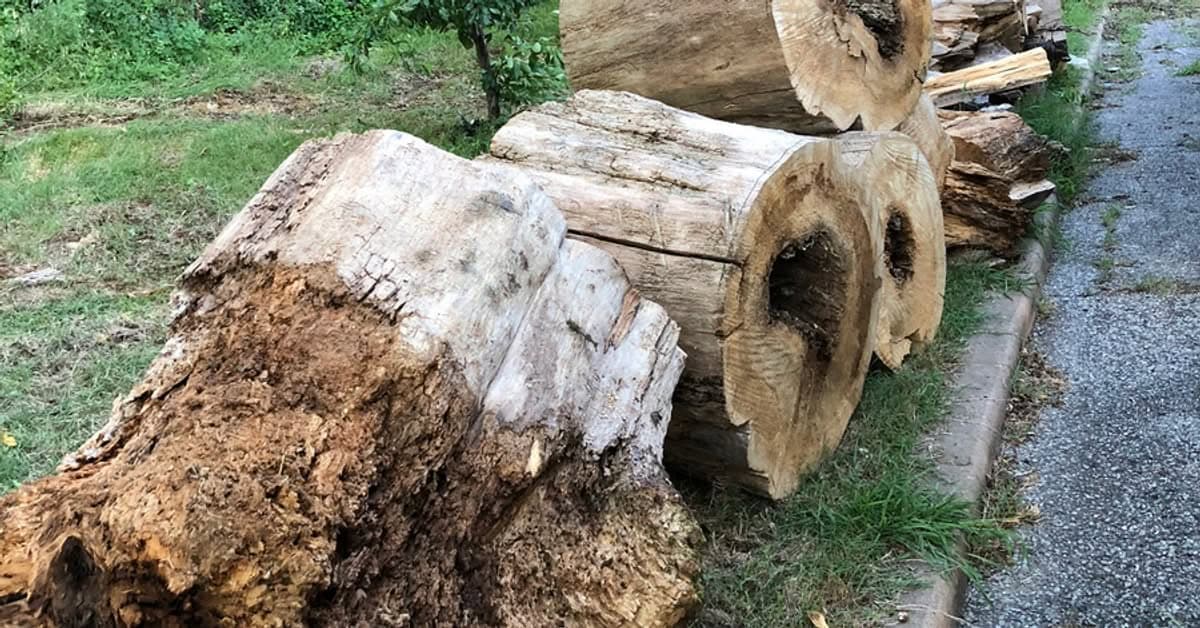
- The split reaches the ground: If a crack runs all the way down into the root flare, the foundation of the tree is gone. No amount of steel cable can fix a broken foundation.
- There is internal rot: If you see mushrooms growing out of the crack or the inside of the tree looks like wet mulch, the wood is too soft to hold a bolt or a rod.
- The Target is too high: If the tree is leaning directly over a nursery, a kitchen, or a neighbor’s house, the what if factor becomes too high. In these cases, removal provides the only 100% guarantee of safety.
- The 50% Rule: If the split has caused half of the canopy to die off or fall, the remaining half will be off-balance and likely to fail soon anyway.
A professional tree removal in South Tulsa, OK can assist you in deciding the fate of a massive tree by conducting thorough inspections and evaluating trunk integrity, branch health, and root stability to determine the safest solution. Post that they will provide detailed explanations and options so you can make an informed decision about your tree’s future. Safety, efficiency, and preserving the beauty of your property are always our top priorities.
Davis Family Arbor Services, LLC specializes in structural reinforcement and high-hazard tree removal. As a family, veteran, and woman-owned business with 25+ years of experience, our ISA Board-Certified Master Arborist evaluates trunk, branch, and root health to decide whether cabling can save a tree or removal is the safest choice. We prioritize safety with expert cabling, crane-assisted removals, flat-rate pricing, and 24/7 emergency service, giving you peace of mind and a clear plan for your property. Call us to book your evaluation.
New Customers Discount: We also offer 10% Off any service over $500 or Free Stump Grinding with any tree removal to new customers.