Understanding Tree Defects, Tree Risk, and Responsible Tree Management
One of the most common questions we hear at Davis Family Arbor Services is:
“Do I need to remove my tree?”
It’s a fair question, especially after a severe storm, when a tree begins showing signs of decline, or after receiving conflicting opinions from friends, neighbors, or contractors.
The answer, however, is rarely as simple as “yes” or “no.”
Every tree is unique. The species, age, health, structure, location, surrounding targets, and your long-term goals for the property all play a role in determining the most appropriate course of action.
At Davis Family Arbor Services, we believe tree removal should never be the starting point. Every recommendation begins with a simple question:
Can this tree be safely preserved while meeting the property owner’s objectives?
Sometimes the answer is yes. Sometimes it isn’t. Our responsibility is to provide an objective recommendation based on the facts—not simply recommend the most expensive service.
A Tree Defect Does Not Automatically Mean a Tree Should Be Removed
Many property owners assume that finding a defect means a tree is dangerous.
In reality, trees naturally develop characteristics that can appear concerning without necessarily creating an unacceptable level of risk.
Examples include:
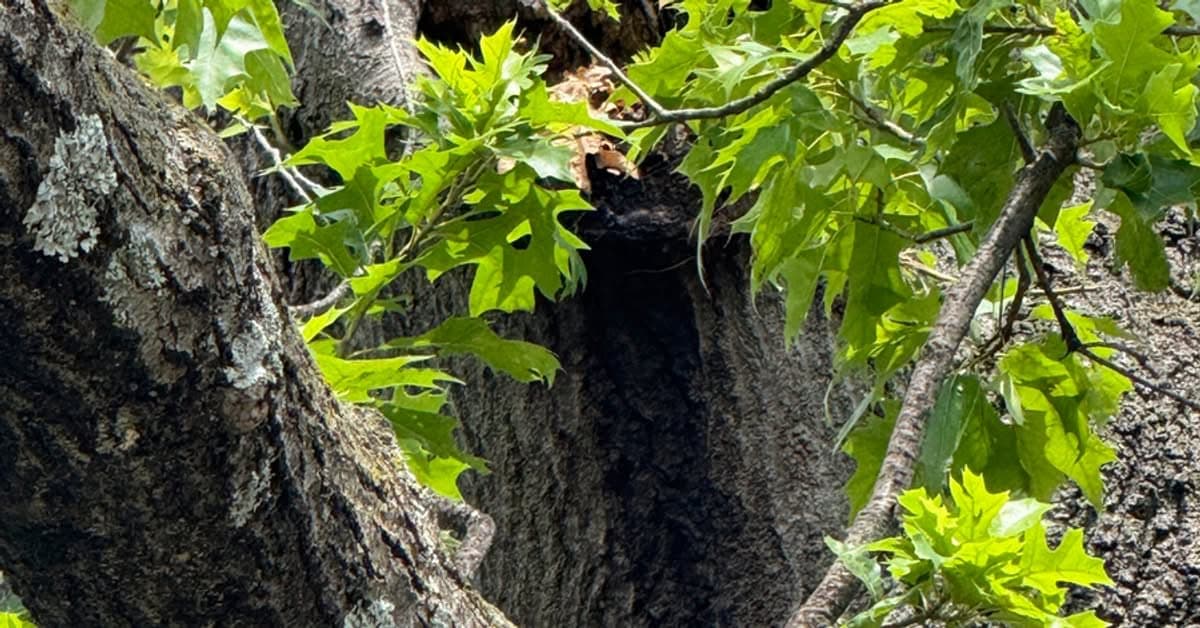
- Hollow areas or cavities
- Dead branches
- Included bark
- Codominant stems
- Old pruning wounds
- Fungal fruiting bodies
- Leaning stems
- Surface root damage
While these conditions deserve attention, they do not automatically mean a tree should be removed.
The important question is not:
“Does this tree have a defect?”
The better question is:
“What does this defect mean, and how does it affect the tree’s overall condition and risk?”
That distinction is one of the most important differences between a quick opinion and a professional arboricultural evaluation.
Understanding Tree Risk
Professional arborists evaluate far more than the visible condition of the tree.
A complete evaluation considers multiple factors working together, including:
- Tree species
- Age and expected longevity
- Overall health and vigor
- Structural condition
- Presence and extent of decay
- Root condition
- Tree size
- Site conditions
- Wind exposure
- Soil characteristics
- Nearby structures
- Occupancy beneath the tree
- Potential targets if failure occurs
For example, a tree with a structural defect growing in an open pasture presents a much different level of concern than an identical tree growing over a home, playground, or frequently occupied driveway.
Risk is not determined by the tree alone—it is influenced by the environment around it.
Preservation Is Often the Best Solution
One of the biggest misconceptions in tree care is that removal is the only answer to structural concerns.
In many situations, appropriate management can significantly improve a tree’s condition while reducing risk.
Depending on the circumstances, preservation may include:
- Structural pruning
- Prescription pruning
- Crown reduction
- Removal of dead branches
- Cabling or supplemental support systems
- Root collar excavation
- Soil improvement
- Vertical mulching
- Air spading investigations
- Plant health care
- Construction tree protection
- Periodic monitoring
These practices may allow valuable trees to remain part of the landscape for many years while meeting the owner’s management objectives.
When Tree Removal May Be Appropriate
Although preservation is always considered first, there are situations where removal becomes the most responsible recommendation.
Examples may include:
The Tree Is Dead
Dead trees eventually lose structural integrity and become increasingly unpredictable. Depending on the species, location, and condition, removal may be appropriate to reduce risk.
Structural Damage Cannot Be Reasonably Managed
Extensive decay, severe root failure, or major structural defects may reach a point where pruning or supplemental support no longer provides an acceptable level of mitigation.
A split trunk is the most common version of that judgement call. Cabling vs. Removal: When to Reinforce a Split Trunk or Say Goodbye? works through it in detail — how splits form, when cabling and bracing are a reasonable option, and the point at which they stop being one.
Severe Storm Damage
Storms can cause extensive structural failures, including broken trunks, split stems, root plate movement, and major branch failures. Some trees recover remarkably well, while others cannot be safely retained.
Construction Conflicts
Occasionally, development projects require difficult decisions. When preservation is no longer practical because of unavoidable impacts to the root system or growing space, removal may become the most realistic option.
The Property Owner’s Objectives
Tree management should always consider the owner’s goals.
One property owner may wish to preserve every mature tree possible. Another may prioritize reducing maintenance, improving visibility, or preparing for future construction.
Our role is to explain the available management options and help property owners make informed decisions.
Looking Beyond the Surface
Not every important condition is visible from the outside.
Sometimes additional information is needed before making significant management decisions.
When appropriate, advanced diagnostic technologies may provide valuable information about internal wood condition or root system characteristics.
Examples include:
- Sonic tomography
- Resistograph resistance drilling
- Root investigations
- Air spading
- Root collar excavation
These tools do not replace professional judgment. Instead, they provide additional information that supports more informed recommendations when visual observations alone cannot adequately answer an important management question.
Every Tree Deserves an Individual Evaluation
No two trees are exactly alike.
Two oaks growing side by side may look nearly identical while having completely different structural conditions.
Likewise, two trees with similar defects may require entirely different management recommendations depending on their location, health, and surrounding targets.
That’s why professional arboriculture avoids one-size-fits-all answers.
Each recommendation should be based on the individual tree—not assumptions or appearances.
Our Philosophy
At Davis Family Arbor Services, we believe every tree deserves an objective evaluation before irreversible decisions are made.
Our recommendations are based on accepted arboricultural principles, current industry standards, the condition of the tree, and the property owner’s objectives.
Sometimes that recommendation is preservation.
Sometimes it is pruning.
Sometimes it is continued monitoring.
Sometimes removal truly is the most appropriate management option.
Our goal is not to recommend more removals.
Our goal is to recommend the management option that best serves both the tree and the property owner.
Final Thoughts
Trees often represent decades of growth and contribute significantly to the character, beauty, and value of a property.
Removing one is an important decision that deserves careful consideration.
If you’re uncertain whether a tree should be removed, begin with a professional evaluation. Understanding the tree’s condition, identifying realistic management options, and discussing your objectives can help you make an informed decision with confidence.
Sometimes the best recommendation is preservation.
Sometimes removal is the responsible choice.
The important thing is understanding why.
About the Author
Brad Davis is an ISA Board Certified Master Arborist® (MW-6328B), ISA Tree Risk Assessment Qualified (TRAQ) professional, and ISA Florida Chapter Prescription Pruning Qualified (PPQ) arborist. He provides science-based arboricultural consulting, tree preservation planning, advanced diagnostics, tree risk assessments, construction tree protection, and professional tree care throughout the Tulsa metropolitan area.